Jen and I went along to the National Digital Learning Event and Awards in Cardiff earlier in June. We handed out Taccle books and went to some workshops. There were a few to choose from but I attended a technocamps session which explored some ways of teaching computer science using lego bricks, (build a simple lego structure, now explain to your partner how to build an identical structure without them seeing what you have built) using people, (direct your person around the room using simple commands) and using Cargo Bot. I like what technocamps do, kit like Lego Mindstorms is pretty expensive, so they take the kit around to secondary schools and colleges across Wales for one day workshops. For lots of ideas about how to teach computing, coding and programming for the rest of the year you could check out the Taccle2 blog and the Babitech page.
In the afternoon I had fun playing with Sonic Pi , which uses code for composing and performing music, you can see me in the video below (just after the 2 minute mark) getting flustered because there was a mistake in my loop. Don’t let that put you off, it was really good fun and a great way to get instant and useful results form your code.
The best thing about the day was seeing the great things being done across Wales with Ponty locals Big Click scooping the Commercial Digital Project Award
[youtube https://www.youtube.com/watch?v=GRVhWD9sjkY?rel=0]
You can see all of the other inspirational kids and teachers getting their tech on at the Hwb website with projects like e-safety, coding with minecraft, creating an interactive local map and staging a robot wars competition.
Keep an eye out for next years entries, Welsh kids are good with technology, the competition should be tough!
Posted in Angela Blog, News | Comments Off on Wales National Digital Learning Event 2015
The RadioActive team are in Tallinn this week for PLE 2014, we are running a workshop and will be broadcasting a short live show.
Meanwhile in the UK the young people at Dragon Hall youth organisation have been busy preparing the second part of the fascinating feature ‘Tracks of my Years’ that documents the journey through life of a musician and producer, David ‘Zorro’ Caplin, who gives us a personal perspective on issues such as homelessness and drug addiction. This use of ‘music as storytelling’ is the vehicle for an honest, emotional and typically cautionary tale that exposes the human reality of issues that are often treated trivially or questionably glamorised within the music industry. We think you’ll agree ‘it’s been emotional’.
We all love the Taccle2 website, but we would really like to know what you think about it.
We want to know if you find it easy to use, if the content is interesting enough and if it well structured.
That is why we would like you to answer 5 very simple on-line questions (the questionnaire is available in several languages) :https://www.surveymonkey.com/s/L98VVSW
This will take less than 5 minutes of your time and it will help us a lot to know if we need to improve the website or if you like it just as it is.
A thought provoking post I read a couple of weeks ago by teacher Marc Scott who says”The phone rang through to my workroom. It was one of the school receptionists explaining that there was a visitor downstairs that needed to get on the school’s WiFi network. iPad in hand I trotted on down to the reception to see a young twenty-something sitting on a chair with a MacBook on her knee.
I smiled and introduced myself as I sat down beside her. She handed me her MacBook silently and the look on her face said it all. Fix my computer, geek, and hurry up about it. I’ve been mistaken for a technician enough times to recognise the expression.
‘I’ll need to be quick. I’ve got a lesson to teach in 5 minutes,’ I said. ‘You teach?’
‘That’s my job, I just happen to manage the network team as well.’
She reevaluated her categorisation of me. Rather than being some faceless, keyboard tapping, socially inept, sexually inexperienced network monkey, she now saw me as a colleague. To people like her, technicians are a necessary annoyance. She’d be quite happy to ignore them all, joke about them behind their backs and snigger at them to their faces, but she knows that when she can’t display her PowerPoint on the IWB she’ll need a technician, and so she maintains a facade of politeness around them, while inwardly dismissing them as too geeky to interact with.
I looked at the MacBook. I had no experience with OSX at the time. Jobs wasn’t an idiot though, and displayed proudly in the top right hand corner of the screen was a universally recognisable WiFi symbol. It took me seconds to get the device on the network.
I handed back the MacBook and the woman opened up Safari. ‘The Internet’s not working,’ she stated with disdain.
I’ve heard this sentence so many times now from students and staff, that I have a stock reaction. Normally I pull out my mobile phone and pretend to tap in a few numbers. Holding the handset to my ear I say: ‘Yes, give me the office of the President of the United States…. NO, I WILL NOT HOLD. This is an emergency…. Hello, Mister President, I’m afraid I have some bad news. I’ve just been informed that The Internet is not working.’
I decided that the young woman would probably not appreciate the sarcasm, and took the MacBook off her so I could add in the county’s proxy server settings. I had no idea how to do this on OS X. The county proxy is there to ensure that the staff and students can’t access porn on the school network. It also filters for violence, extremism, swearing, social networks, alcohol, smoking, hacking, gaming and streaming video. Ironically, if you were to perform a Google search for “proxy settings OS X”, the top results would all be blocked because you used the word ‘proxy’ and that is a filtered word.
‘Do you know where the proxy settings are?’ I asked, hopefully.
I don’t get a response. I might as well have asked her ‘Can you tell me how to reticulate splines using a hexagonal decode system so that I can build a GUI in Visual Basic and track an IP Address.’
It took me about ten seconds to find and fill in the proxy settings. I handed back her MacBook and she actually closed Safari and reopened it, rather than just refreshing. ‘Thanks.’ Her gratitude was overwhelming.
I was about to leave, when she stopped me. ‘PowerPoint’s not working’.
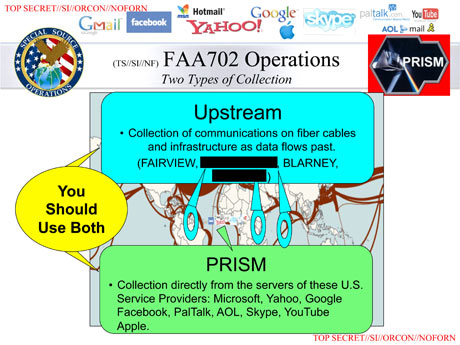
This probably didn’t warrant a phone call to the President of the United States. I’m sure he takes an interest in technological issues, but the breakdown of the World’s leading presentation tool would probably be somewhat of a relief to him. At least the NSA wouldn’t be losing any more poorly designed slide-shows.
I sat back down and once again took possession of her MacBook. The slide she was displaying contained an embedded YouTube video, and as I have said, streaming video is blocked. I tried to explain this to the woman, and she then patronisingly explained that it shouldn’t matter as the video was in her PowerPoint and that was running from her USB stick. I didn’t argue, it was really not worth my time. Instead I do what I normally do for people and Just make it work. Using my iPad’s 3G connection, I set up a hot-spot and download the YouTube video using a popular ripping site and then embed the now local video in her presentation.
‘So what do you teach?’ she asked as I worked on her presentation.
‘Computing’ I replied.
‘Oh… I guess these days you must find that the kids know more about computers than the teachers….’
If you teach IT or Computing, this is a phrase that you’ll have heard a million times, a billion times, epsilon zero times, aleph one times. Okay I exaggerate, but you’ll have heard it a lot. There are variants of the phrase, all espousing today’s children’s technical ability. My favourite is from parents: ‘Oh, Johnny will be a natural for A-Level Computing. He’s always on his computer at home.’ The parents seem to have some vague concept that spending hours each evening on Facebook and YouTube will impart, by some sort of cybernetic osmosis, a knowledge of PHP, HTML, JavaScript and Haskell.
Normally when someone spouts this rubbish I just nod and smile. This time I simply couldn’t let it pass. ‘Not really, most kids can’t use computers.’ (and neither can you – I didn’t add.)
She looked surprised by my rejection of what is generally considered a truism. After all, aren’t all teenagers digital natives? They have laptops and tablets and games consoles and smart phones, surely they must be the most technologically knowledgeable demographic on the planet. The bell went, and I really did have a lesson to teach, so I didn’t have time to explain to her my theories on why it is that kids can’t use computers. Maybe she’ll read my blog.
The truth is, kids can’t use general purpose computers, and neither can most of the adults I know. There’s a narrow range of individuals whom, at school, I consider technically savvy. These are roughly the thirty to fifty year-olds that have owned a computer for much of their adult lives. There are, of course, exceptions amongst the staff and students. There are always one or two kids in every cohort that have already picked up programming or web development or can strip a computer down to the bare bones, replace a motherboard, and reinstall an operating system. There are usually a couple of tech-savvy teachers outside the age range I’ve stated, often from the Maths and Science departments who are only ever defeated by their school laptops because they don’t have administrator privileges, but these individuals are rare.
I suppose before I go on I should really define what I believe ‘can’t use a computer’ means. Being a network manager as well as a teacher means I am often the first port of call when a teacher or student is having issues with computers and associated devices. As my lead technician likes to state, ‘the problem is usually the interface between the chair and the keyboard.’ Here are a few examples of issues I encounter on a fairly regular basis.
A sixth-former brings me his laptop, explaining that it is running very slowly and keeps shutting down. The laptop is literally screaming, the processor fans running at full whack and the case is uncomfortably hot to touch. I run Task Manager to see that the CPU is running at 100% despite the only application open being uTorrent (which incidentally had about 200 torrent files actively seeding). I look at what processes are running and there are a lot of them, hogging the CPU and RAM. What’s more I can’t terminate a single one. ‘What anti-virus are you using?’ I ask, only to be told that he didn’t like using anti-virus because he’d heard it slowed his computer down. I hand back the laptop and tell him that it’s infected. He asks what he needs to do, and I suggest he reinstalls Windows. He looks at me blankly. He can’t use a computer.
A kid puts her hand up in my lesson. ‘My computer won’t switch on,’ she says, with the air of desperation that implies she’s tried every conceivable way of making the thing work. I reach forward and switch on the monitor, and the screen flickers to life, displaying the Windows login screen. She can’t use a computer.
A teacher brings me her school laptop. ‘Bloody thing won’t connect to the internet.’ she says angrily, as if it were my fault. ‘I had tonnes of work to do last night, but I couldn’t get on-line at all. My husband even tried and he couldn’t figure it out and he’s excellent with computers.’ I take the offending laptop from out of her hands, toggle the wireless switch that resides on the side, and hand it back to her. Neither her nor her husband can use computers.
A kid knocks on my office door, complaining that he can’t login. ‘Have you forgotten your password?’ I ask, but he insists he hasn’t. ‘What was the error message?’ I ask, and he shrugs his shoulders. I follow him to the IT suite. I watch him type in his user-name and password. A message box opens up, but the kid clicks OK so quickly that I don’t have time to read the message. He repeats this process three times, as if the computer will suddenly change its mind and allow him access to the network. On his third attempt I manage to get a glimpse of the message. I reach behind his computer and plug in the Ethernet cable. He can’t use a computer.
A teacher brings me her brand new iPhone, the previous one having been destroyed. She’s lost all her contacts and is very upset. I ask if she’d plugged her old iPhone into her computer at any time, but she can’t remember. I ask her to bring in her laptop and iPhone. When she brings them in the next day I restore her phone from the backup that resides on her laptop. She has her contacts back, and her photos as well. She’s happy. She can’t use a computer.
A teacher phones my office, complaining that his laptop has “no internet”. I take a walk down to his classroom. He tells me that the internet was there yesterday, but today it’s gone. His desktop is a solid wall of randomly placed Microsoft office icons. I quickly try and explain that the desktop is not a good place to store files as they’re not backed up on the server, but he doesn’t care; he just wants the internet back. I open the start menu and click on Internet Explorer, and it flashes to life with his homepage displayed. He explains that the Internet used to be on his desktop, but isn’t any more. I close I.E. and scour the desktop, eventually finding the little blue ‘e’ buried amongst some PowerPoint and Excel icons. I point to it. He points to a different location on the screen, informing me of where it used to be. I drag the icon back to it’s original location. He’s happy. He can’t use a computer.
A kid puts his hand up. He tells me he’s got a virus on his computer. I look at his screen. Displayed in his web-browser is what appears to be an XP dialogue box warning that his computer is infected and offering free malware scanning and removal tools. He’s on a Windows 7 machine. I close the offending tab. He can’t use a computer.
Not really knowing how to use a computer is deemed acceptable if you’re twenty-five or over. It’s something that some people are even perversely proud of, but the prevailing wisdom is that allunder eighteens are technical wizards, and this is simply not true. They can use some software, particularly web-apps. They know how to use Facebook and Twitter. They can use YouTube and Pinterest. They even know how to use Word and PowerPoint and Excel. Ask them to reinstall an operating system and they’re lost. Ask them to upgrade their hard-drive or their RAM and they break out in a cold sweat. Ask them what https means and why it is important and they’ll look at you as if you’re speaking Klingon.
They click ‘OK’ in dialogue boxes without reading the message. They choose passwords like qwerty1234. They shut-down by holding in the power button until the monitor goes black. They’ll leave themselves logged in on a computer and walk out of the room. If a program is unresponsive, they’ll click the same button repeatedly until it crashes altogether.
How the hell did we get to this situation? How can a generation with access to so much technology, not know how to use it?
Parents
I’ve messed up, as I’m sure many of you have. When we purchased an XBox it was Techno-Dad to the rescue. I happily played about with the mess of cables and then created profiles for everyone. When my son’s MacBook was infected with the FlashBack virus Techno-Dad to the rescue. I looked up some on-line guides and then hammered away in the terminal until I had eradicated that bad-boy. When we purchased a ‘Family Raspberry Pi’ Techno-Dad to the rescue. I hooked it all up, flashed an OS to the SD-card and then sat back proudly, wondering why nobody other than me wanted to use the blasted thing. All through their lives, I’ve done it for them. Set-up new hardware, installed new software and acted as in-house technician whenever things went wrong. As a result, I have a family of digital illiterates.
Schools
When it became apparent that computers were going to be important, the UK Government recognised that ICT should probably become part of the core curriculum in schools. Being a bunch of IT illiterates themselves, the politicians and advisers turned to industry to ask what should be included in the new curriculum. At the time, there was only one industry and it was the Microsoft monopoly. <sarcasm>Microsoft thought long and hard about what should be included in the curriculum and after careful deliberation they advised that students should really learn how to use office software</sarcasm>. And so the curriculum was born. <sarcasm>Schools naturally searched long and hard for appropriate office software to teach with, and after much care they chose Microsoft Office</sarcasm>. So since 2000 schools have been teaching students Microsoft skills (Adobe skills were introduced a little later).
But the curriculum isn’t the only area in which we’ve messed up. Our network infrastructures in UK schools is equally to blame. We’ve mirrored corporate networks, preventing kids and teachers access to system settings, the command line and requiring admin rights to do almost anything. They’re sitting at a general purpose computer without the ability to do any general purpose computing. They have access to a few applications and that’s all. The computers access the internet through proxy servers that aggressively filter anything less bland than Wikipedia, and most schools have additional filtering software on-top so that they can maintain a white-list of ‘suitable sites’.
Windows and OSX
My first PC was an ESCOM P100 with Windows 3.1. My second was a Packard Bell with Windows 95. My third was a custom build with Windows XP. My fourth was an Acer laptop with Windows 7. I now use a MacBook Pro with OS X (or occasionally Ubuntu, depending on my mood and levels of paranoia). Windows 7 was a game changer for me. It was the first time I’d installed an OS and had literally nothing to configure. Even a PE teacher could have managed it.
Windows 7 (I hate 8, but that’s another story) and Mac OS X are great operating systems. They’re easy to use, require almost no configuration, include or provide easy access to all needed drivers, and generally ‘just work’. It’s fantastic that everyone from the smallest child to the eldest grandparent can now use a computer with absolute minimal technical literacy, but its also a disaster. It didn’t used to be like this. Using an OS used to be hard work. When things went wrong you had to dive in and get dirty to fix things. You learned about file systems and registry settings and drivers for your hardware. Not any more.
I should think the same thing will one day be said about the ability to drive. There will still be the auto-mobile geeks out there that’ll build kit cars and spend days down the track honing their driving skills, while the rest of us sit back and relax as Google ferries us to and from work in closeted little bubbles.
Mobile.
Mobile has killed technical competence. We now all carry around computers that pretend to be mobile phones or tablets. Most people don’t even think of their phone as a computer. It’s a device to get quick and easy access to Google. It’s a device that allows us to take photos and post them to Facebook. It’s a device that allows us to play games and post our scores to Twitter. It’s a device that locks away the file system (or hides it from us). It’s a device that only allows installation of sanitised apps through a regulated app store. It’s a device whose hardware can’t be upgraded or replaced and will be obsolete in a year or two. It’s a device that’s as much a general purpose computer as the Fisher Price toy I had when I was three.
So this is the state of the world. Let’s make up some statistics to illustrate my point. If 20 years ago 5% of us had a computer in our homes, then you could pretty much guarantee that 95% of those computer owners were technically literate. Today, let’s assume that 95% of us have a computer in our homes, then I would guess that around 5% of owners are technically literate.
This is scary and I’m sure the real statistics would be scarier still. It’s something we should all be worried about.
Why?
Technology affects our lives more than ever before. Our computers give us access to the food we eat and the clothes we wear. Our computers enable us to work, socialise and entertain ourselves. Our computers give us access to our utilities, our banks and our politics. Our computers allow criminals to interact with us, stealing our data, our money, our identities. Our computers are now used by our governments, monitoring our communications, our behaviours, our secrets. Cory Doctorow put it much better than I can when he said:
There are no airplanes, only computers that fly. There are no cars, only computers we sit in. There are no hearing aids, only computers we put in our ears.
The Summer of Surveillance has me worried.
After Snowden’s revelations first came out, I went into school on Monday to find that most of my colleagues and students had either not heard about the scandal, or if they had just didn’t care. While I was busy deleting my on-line accounts and locking down my machines, my friends called me paranoid and made jokes about tinfoil hats. My family shrugged their shoulders in that ‘Meh’way, and mumbled the often quoted ‘Nothing to hide, nothing to fear.’ Then, out of the blue, Cameron announces that ISPs are going to start filtering The Internet. It’s described as a ‘porn filter’, but the Open Rights Group’s investigations implies that far more than porn will be filtered by default. Then to top it all, Cameron’s chief advisor on this issue has her website hacked and displays just how technically illiterate she really is.
Tomorrow’s politicians, civil servants, police officers, teachers, journalists and CEOs are being created today. These people don’t know how to use computers, yet they are going to be creating laws regarding computers, enforcing laws regarding computers, educating the youth about computers, reporting in the media about computers and lobbying politicians about computers. Do you thinks this is an acceptable state of affairs? I have David Cameron telling me that internet filtering is a good thing. I have William Hague telling me that I have nothing to fear from GCHQ. I have one question for these policy makers:
Without reference to Wikipedia, can you tell me what the difference is between The Internet, The World Wide Web, a web-browser and a search engine?
If you can’t, then you have no right to be making decisions that affect my use of these technologies. Try it out. Do your friends know the difference? Do you?
Fixing it all
Parents
Stop fixing things for your kids. You spend hours of your time potty-training them when they’re in their infancy, because being able to use the toilet is pretty much an essential skill in modern society. You need to do the same with technology. Buy them a computer by all means, but if it goes wrong, get them to fix it. Buy them a smartphone, give them 贈10 of app store credit a year and let them learn why in-app-purchases are a bad idea. When we teach kids to ride a bike, at some point we have to take the training wheels off. Here’s an idea. When they hit eleven, give them a plaintext file with ten-thousand WPA2 keys and tell them that the real one is in there somewhere. See how quickly they discover Python or Bash then.
Schools
In the UK we’re moving some way towards fixing this issue. Gove and I have a love-hate relationship, but I genuinely like what he is doing to the Computer Science curriculum. We just need to make sure that Academy Heads stick to Computer Science, and don’t use curriculum reform as a means to save some money by scrapping the subject all together.
We could do more though.
1
We should be teaching kids not to install malware, rather than locking down machines so that it’s physically impossible. We should be teaching kids to stay safe on-line rather than filtering their internet. Google and Facebook give kids money if they manage to find and exploit security vulnerabilities in their systems. In schools we exclude kids for attempting to hack our systems. Is that right?
Windows and OSX
USE LINUX. Okay, so it’s not always practical, but most Linux distros really get you to learn how to use a computer. Everyone should at least have a play around at some point in their lives. If you’re not going to use Linux then if you’re on OS X have a play around in the terminal. It really is fun and you get to feel like a hacker, as does the Command Line or PowerShell in Windows.
Mobile
This one’s tricky. iOS is a lost cause, unless you jail-break, and Android isn’t much better. I use Ubuntu-Touch, and it has possibilities. At least you feel like the mobile phone is yours. Okay, so I can’t use 3G, it crashes when I try to make phone calls and the device runs so hot that when in my jacket pocket it seconds as an excellent nipple-warmer, but I can see the potential.
Conclusion
This has happened before. It is not a new phenomenon. A hundred years ago, if you were lucky enough to own a car then you probably knew how to fix it. People could at least change the oil, change the tyres, or even give the engine a tune-up. I’ve owned a car for most of my adult life and they’re a mystery to me. As such I am dependent on salesmen to tell me which one to buy, mechanics to tell me what’s wrong and then fix it for me and as technology progresses I am becoming dependent on satellite navigation as well. I doubt my five year-old son will even need to learn to drive. It’ll be done for him by his car. When he needs to get it fixed he’ll be directed to the mechanic that pays the most for on-line advertising. When he wants to stop for a bite to eat he’ll be directed to the fast-food outlet that pays the most for on-line advertising. When he needs to recharge his dilithium crystals he’ll be directed to the filing station that pays the most for on-line advertising.
I want the people who will help shape our society in the future to understand the technology that will help shape our society in the future. If this is going to happen, then we need to reverse the trend that is seeing digital illiteracy exponentially increase. We need to act together, as parents, as teachers, as policy makers. Let’s build a generation of hackers. Who’s with me?”
Posted in News | Comments Off on Kids can’t use computers…and this is why it should worry you!
We are really excited about the Taccle 2 project – 5 hard copy handbooks and a website bursting with practical ideas on how to use web 2.0 apps and other e-learning tools in your classroom.
The project has reached its half way mark and we are so far on target. The E-learning handbook for Primary Teachers has just come back from the layout artist and is in its final proof reading stage. (There is a temporary version available if you want to take a look)
The E-learning handbook for STEM teachers is waiting for the layout artist to make it look pretty and the E-learning for Humanities is in its draft version. This will be available on the site within the next week.
The next book, E-learning for Creative and Performing Arts has just been started – we are still at the stage of collecting ideas but they are coming in thick and fast. The final book, E-learnig for Core Skills 14-19 is at the planning stage. All books will be ready for printing by April 2014.
Meanwhile, check out Taccle2 website It has 280 posts at the moment and our rough estimate is that there are well over a thousand ideas that can be navigated by subject, age, software, language, format and more. Even better, judging from the number of visitors who return and the number of contributions and comments, there is a growing community around the Taccle2 site which will expand rapidly once the Taccle2 training starts next month.
Please come and join us and spread the word – tried and tested ideas for using technology in the classroom, created by teachers for teachers. No theory, no research just inspiration!
PS you can also follow us on Twitter #taccle or on the Taccle2 Diigo group or on Scoop.it – so no excuses!!
“The youth unemployment rate is close to 23% across the European Union – yet at the same time there are more than 2 million vacancies that cannot be filled. Europe needs a radical rethink on how education and training systems can deliver the skills needed by the labour market.” So says the European Commission in their new strategy called Rethinking Education which is designed “to encourage Member States to take immediate action to ensure that young people develop the skills and competences needed by the labour market and to achieve their targets for growth and jobs.”
The actio0n proposed is less than radical and somewhat depressing: more focus on ‘learning outcomes; assessment methods need to be adapted and modernised; the use of ICT and open educational resources (OER) should be scaled-up in all learning contexts; teachers need to update their own skills through regular training; stronger links between education and employers; bring enterprise into the classroom.
The European Commission has very little power over education being mainly reduced to appealing to Member States to follow its lead. Yet with unemployment at crisis levels this was a chance for them to take a radical relook at the role of education in Europe. The list of measures (if they can be called that) above seem rather tired and are certainly not radical. A greater focus on learning outcomes and bringing enterprise into the classroom are going to do little to improve education, still less create teh jobs so desperately need by unemployed young people.
Posted in News, policy, politics | Comments Off on Europe cops out on Rethinking education
The Wales Government has announced its plans to implement the recommendations of a report it commissioned earlier this year “Find it, make it, use it, share it: learning in Digital Wales.” We are quite excited that Wales is one of the pioneers in developing a whole-country strategy for the promotion of digital technologies in school classrooms – including advocating the widespread use of mobile devices, a shift to a PLE rather than MLE focus and the use of social software for learning. There are one or two things we disagree with, such as the heavy emphasis on a ‘national’ collection of resources, but the rest of the report is exciting, forward thinking and realistic. There is a serious commitment to mass staff development at all levels – surely the biggest barrier to take up of new technologies in the classroom – including defining a set of digital competences for teachers. This report also recommends that these competences (personal AND pedagogic) be compulsory in ITT courses.
The other section of the report which will cause major ripples is the chunk entitled “External conditions for success” which seem to us to identify all of the brick walls which teachers come up against and suggests that they should be dismantled. I am going to quote the report in full because it is music to the ears of most of us involved with e-learning in schools.
Universal take-up of digital opportunities assumes that:
all learning providers, and indeed all classrooms, can connect to the internet at sufficient speeds to enable efficient use of digital resources
interface equipment – whiteboards, PCs, tablets, mobile devices, etc. – are available widely enough within learning providers to give quick and easy access to resources. ‘Bring your own device’ solutions may be appropriate here
learners and teachers are not prevented from using resources by general restrictions imposed by local authorities or learning providers on certain types of hardware (e.g. smart phones), software (e.g. ‘apps’) or web resources (e.g. Facebook, YouTube or Twitter)
learners and their parents/carers have adequate access athome (and increasingly on mobile devices) to ensure that technology-enhanced learning in the classroom can be replicated and deepened outside the learning provider.
LEAs, take note!!
The main vehicle for turning the report into reality will be an organisation called the ‘Hwb’ (no, not a funny way of spelling Hub, ‘hwb’ means to promote, push or inspire). Its remit will be to lead, promote and support the use of digital resources and technologies by learners and teachers across Wales and create and develop a national digital collection for learning and teaching in English and Welsh. Both Pontydysgu and the Taccle2 project in Wales are committed to doing what we can to support the Hwb and will make sure that all our resources and experience in the field are freely available.
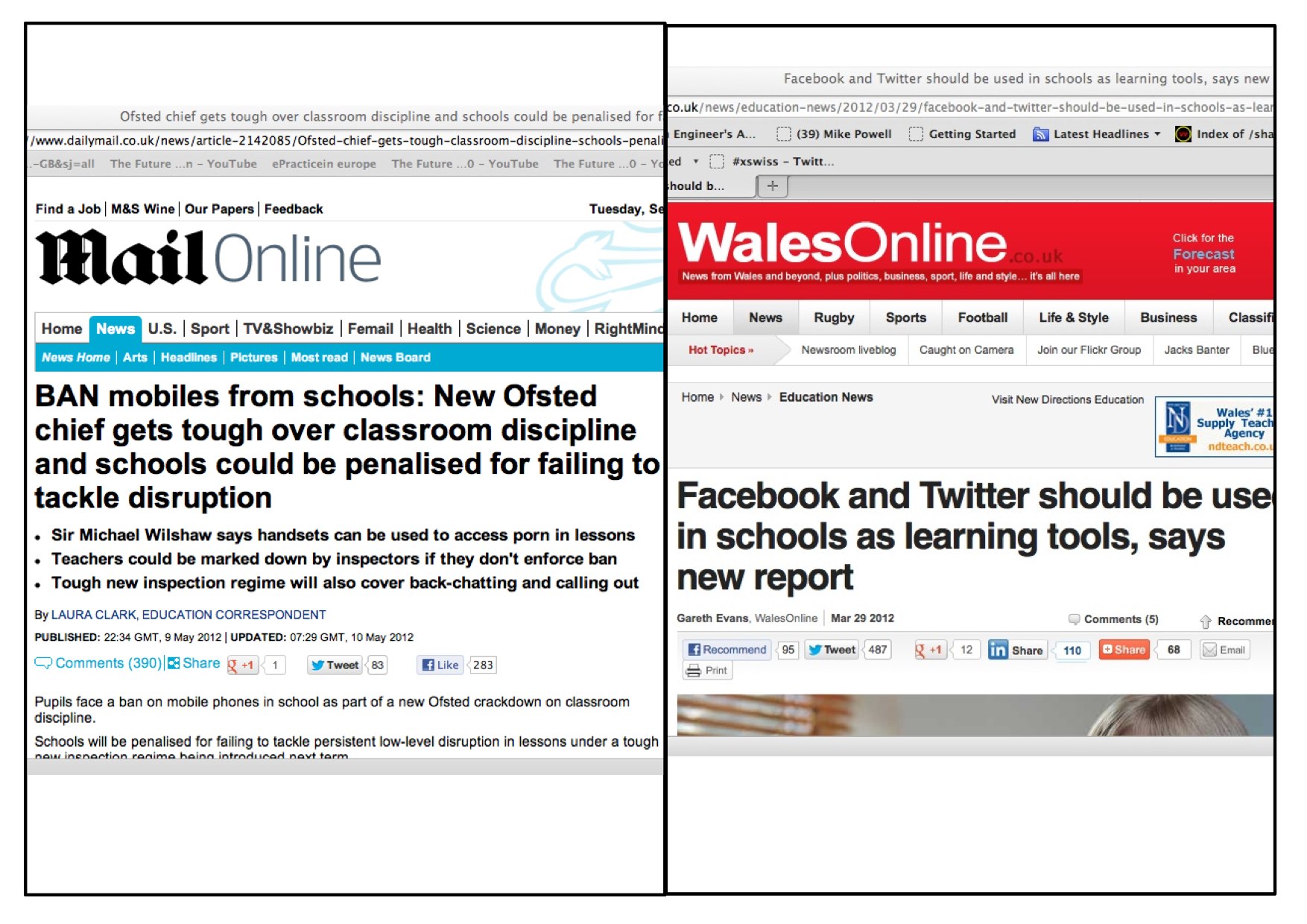
The driving force behind it all is Leighton Andrews, the Minister for Education in Wales – with whose politics I usually disagree – but I am very happy to admit that he has come up trumps with this one! He is knowledgable, committed and comes across as a genuinely enthusiastic technophile with an understanding of what education could look like in the future and a clear vision of how, in Wales, we are going to get there. (“Just like Michael Gove!”, I hear my English colleagues say….). I must admit, that even as a card-carrying member of a different party (byddwch chi’n dyfalu!), devolution has been all good in terms of education and we have had two excellent Ministers. Look at the image on the top of this post and you may understand why we are looking forward to an increasing divergence and autonomy. Team GB? No thanks!
The UK Border Agency (UKBA) revoked London Metropolitan University’s ‘highly trusted sponsor’ status. This means that London Met is no longer able bring in non-EU students into the UK to study under the ‘Tier 4’ visa scheme.
Students currently studying at London Met will have their visas withdrawn: at least 2000 face deportation within 60 days of official notification, unless they can find another sponsor. Effectively they must find a place on another course at another institution.
The UK Border Authority have justified their actions as being due to inadequate record keeping by the London Met administration who had failed to ensure overseas students had adequate English levels and were attending lectures. Universities themselves are now required to ‘police; overseas students in the UK. London Met claim their have been 14 changes in the requirements over the past few years and are seeking a judicial review of the withdrawal of their license.
London Met is seen by many of having been caught in a dispute between the English government’s Department of Business, Innovation and Skills (BIS) which has responsibility for higher education and keen to promote the sector as an export successes (to which fees from overseas students make up a large contribution) and Theresa May, Home Secretary,who is bound by David Cameron’s pledge to reduce net immigration to the ‘tens of thousands’.
London Met is seen as an easy target, given its long running reputation for poor management.
Yet there may be a more sinister aim. According to wonkhe: “Only last week, exaro news broke the story that London Met had issued a tender for a management consultancy to take over the running of all university activities besides teaching and the vice-chancellor himself.”
Without funding from overseas student London Met University is very likely to go bankrupt. And with the government seemingly committed to privatisation of universities this could be their big opportunity to welcome a private takeover of a major London university, presented as saving the institution.
Sounds like conspiracy theory (See Martin Weller’s blog for more on this)? Perhaps, but I wouldn’t put anything past this Tory government.
Posted in News, politics | Comments Off on What is going on at London Met?
The reality of the political drive to privatise education in England is becoming real.
Young people have traditionally had access to careers guidance and advice through a national careers service, although under the past Labour government this was reorganised into a series of private companies, generally called Connexions, that bid for contracts based on client services. Now, despite some requirements for schools to provide careers advice, the central contracts for Connexions services have been withdrawn.
Nearly every carers organisation has announced major redundancies, a number have simply collapsed. Most of the remaining services have rebranded as CX instead of the clumsy Connexions name.
However new business models remain elusive. Whilst competition for remaining public funding is fierce, many of the companies have formed alliances to bid for resources. Most are trying to sell services but this is resulting in an over crowded market, especially as media and other organisations start moving in.
Many are also considering offering paid for services. One careers company in south east England is now targeting their web site at parents and carers, offering careers interviews for their child at £50 or a psychometric test for £90 with a follow up meeting to look at the results for a further £30.
It can be argued that the quality of careers provision has been variable in the past, not helped by frequent changes in policy and funding mechanisms. And I suppose the level of charges will certainly put pressure on the organisations to provide high quality services. Yet access to these services will now be dependent on income and it is likely that the clients who have gained most from careers services in the past – NEETs and those with low educational attainments – will be the very ones with parents unable to afford such services.
And I fear this will also be so for other sections of education as privatisation moves forward.
It is important to note that the changes described above only apply to England – Scotland, Wales and Northern Ireland have maintained a public careers service.
Posted in careers, News, politics | Comments Off on The results of creeping privatisation
There have been a series of initiatives over the last year or so to kick off a new debate about education. In part these have been driven by the student protests in many countries following the economic collapse and recession. But the debate has largely focused on academic education – at school and university level.
Sadly there has been little consideration of vocational education and training policies. Yet with youth unemployment soaring to over 50 per cent in some European countries, education and training policy needs a fresh focus. And education and training cannot be examined in isolations. Education and training is affected by and in turn affects economic and labour market policies.
Neo-liberal, market driven policies have resulted in the present high levels of youth unemployment. Yet the politicians’ answers to the crisis – austerity and cutbacks and further privatisation – will only make matters worse.
The recent elections in France, Greece and Germany have led to new talk of a strategy for European growth. Any such strategy needs to include measures to promote education and training and to reduce youth unemployment. This means we need an alternative to the present unimaginative and failed European policies on education and training. Such an alternative can only come from within the education and training community. Yet sadly, there is no natural forum for such a discussion to take place.
Forbes reports that Microsoft has obtained a patent for a “conversational chatbot of a specific person” created from images, recordings, participation in social networks, emails, letters, etc., coupled with the possible generation of a 2D or 3D model of the person.
This week, Twitter apologised for racial bias within its image-cropping algorithm. The feature is designed to automatically crop images to highlight focal points – including faces. But, Twitter users discovered that, in practice, white faces were focused on, and black faces were cropped out. And, Twitter isn’t the only platform struggling with its algorithm – YouTube has also announced plans to bring back higher levels of human moderation for removing content, after its AI-centred approach resulted in over-censorship, with videos being removed at far higher rates than with human moderators.
Gap between rich and poor university students widest for 12 years
The gap between poor students and their more affluent peers attending university has widened to its largest point for 12 years, according to data published by the Department for Education (DfE).
Better-off pupils are significantly more likely to go to university than their more disadvantaged peers. And the gap between the two groups – 18.8 percentage points – is the widest it’s been since 2006/07.
The latest statistics show that 26.3% of pupils eligible for FSMs went on to university in 2018/19, compared with 45.1% of those who did not receive free meals. Only 12.7% of white British males who were eligible for FSMs went to university by the age of 19. The progression rate has fallen slightly for the first time since 2011/12, according to the DfE analysis.
Quality Training
From Raconteur. A recent report by global learning consultancy Kineo examined the learning intentions of 8,000 employees across 13 different industries. It found a huge gap between the quality of training offered and the needs of employees. Of those surveyed, 85 per cent said they , with only 16 per cent of employees finding the learning programmes offered by their employers effective.
We will be at Online Educa Berlin 2015. See the info above. The stream URL to play in your application is Stream URL or go to our new stream webpage here SoB Stream Page.
This website uses cookies to improve your experience. We'll assume you're ok with this, but you can opt-out if you wish. Cookie settingsACCEPT
Privacy & Cookies Policy
Privacy Overview
This website uses cookies to improve your experience while you navigate through the website. Out of these cookies, the cookies that are categorized as necessary are stored on your browser as they are essential for the working of basic functionalities of the website. We also use third-party cookies that help us analyze and understand how you use this website. These cookies will be stored in your browser only with your consent. You also have the option to opt-out of these cookies. But opting out of some of these cookies may have an effect on your browsing experience.
Necessary cookies are absolutely essential for the website to function properly. This category only includes cookies that ensures basic functionalities and security features of the website. These cookies do not store any personal information.
Any cookies that may not be particularly necessary for the website to function and is used specifically to collect user personal data via analytics, ads, other embedded contents are termed as non-necessary cookies. It is mandatory to procure user consent prior to running these cookies on your website.