Archive for the ‘academia’ Category

Leonardo@Ars Electronica 2010

August 21st, 2010 by Daniela Reimann

ARS 20010 LOGO

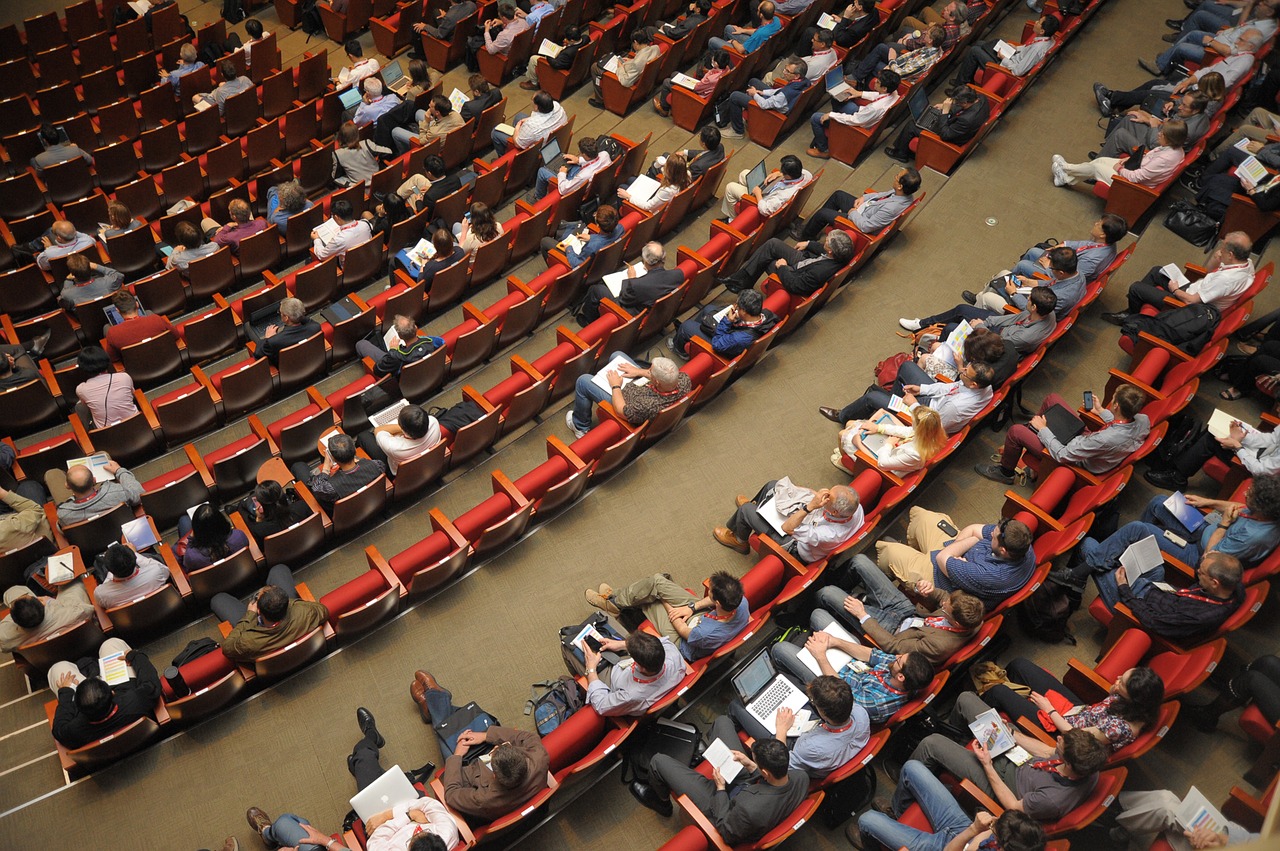
This year’s Leonardo@Ars Electronica 2010 symposium focuses on the dual issues of interdisciplinary research in art, design, science and technology as well as relevant models of PhD degree studies. It is organized as a public event for media and art educators, teachers and researchers to take place on September 6 at the University of Art and Industrial Design, Hauptplatz 8, 4020 Linz, A&B rooms (see here for venue). The symposium is coordinated by Nina Czegledy, Leonardo/ISAST and Dr. Daniela Reimann, KIT, in collaboration with Prof. Dr. Angelika Plank, University of Art and Industrial Design, Linz and in conjunction with Ars Electronica. Please find below the preliminary program:

10.00
Welcome. Prof. Dr. Angelika Plank, Head Departments of Art Education and interim of Media Design /Teacher Training Program, University of Art and Industrial Design, Linz

10.15
Greetings: Representative of the Federal Ministry of Education, Arts and Culture

10.30
Welcome: Nina Czegledy on behalf of Leonardo/ISAST

10.40
Introduction: Educational research and new models of knowledge transfer.
Nina Czegledy, KMDI University of Toronto, Concordia University Montreal

11.00 DI Christopher Lindinger, Ars Electronica Futurelab, Visiting Professor Media Design/Teacher Training Program, University of Art and Industrial Design, Linz Future Elevation

11.30 Dr. Daniela Reimann, Karlsruhe Institute of Technology KIT, Institute of Vocational and General Education, KIT-focus “Humans and Technology”, researcher, and consultant of the Media Design/Teacher Training Program, University of Art and Industrial Design Linz:
Crossing the borders of arts, science and technology in education

12:00 Prof. Dr. Jillian Scott, Head Head, Karmen Franinovic, The Zürich Node of
Plymouth University in the Institute of Cultural Studies, Zürich University of the Arts
- www.z-node.net

12.30 Lunch Break

13.30 Dr. Lanfranco Aceti, Associate Professor, Contemporary Art & Digital Culture Sabanci University, Istanbul, Artistic Director and Lead Curator ISEA2011, Istanbul:
Transmediation of content and people across disciplines: The challenges of hybrid teaching and Hybrid Students.

14.00 Karen Lancel, artist and educator, HKU Utrecht, Academy Minerva, Groningen
currently developing a policy paper on practice based PhD studies. New parameters
for an online practice based phd.Case study: TELE TRUST

14.30 Michael John Gorman, Founding Director of Science Gallery at Trinity College Dublin:
The Art-Science Interface and the public face of the research university: Lessons from the first two years of Science Gallery at Trinity College Dublin”

15.00 Open discussion.

15.30 Closing Remarks

16.30 end of session

Symposium Abstract
An increasing need is manifested to develop new curricula informing innovative qualifications, new job profiles in the field of media design research and education, that is design inspired research, and design strategies including a research approach.
Working towards a sustainable convergence between educational research in design, science and technology remains a burning issue. The introduction of new forms of art practice and design at the intersection of media, arts, science and technology requires the introduction and application of distinguished qualification for educators. Yet in several European countries PhD degrees are not yet available in media arts and interdisciplinary studies.

What kind of new art genres are being developed by artists’ creative use of mixed media technologies, visual culture and communities and what is their impact on education? How is design research and education being embedded in the new modular curricula structures? What are the most effective elements of curricula to educate artists as well as art teachers for the future? Media design today is not only a means for research, but also an overall approach towards research shaping new possibilities opening up through design, design research (Laurel, 2004) as well as learning through (game) design (Kafai, 1994). The artistic aspects of interaction have been gradually explored and implemented within the framework of Interface Culture by Sommerer and Mignonneau (2008). An emerging tendency towards research orientation can be also observed as a broader trend in the field of arts and design. Interactive media art is blurring disciplines and has been reflected as a means to trigger and inspire creative processes in education (Reimann, 2006). The tool of design as social intervention is also becoming a hot topic for scholarly research as well as applied studies.

The changing media and art education institutions require an interactive debate on the conditions and evaluation criteria for developing new models for institutional networks and qualifications that allow implementing the media arts across curricula structures. Thus the symposium investigates through international presenters and open discussion the increasingly important issues of interdisciplinary research and higher teaching qualifications, including the initial art and design teacher training programs.

Aims and objectives:
To inspire an open discussion by educators and the public on burning issues towards developing an international dialogue.

For updates please access the Ars Electronica Web site here or the Web site of the Media Design Teacher Training @ the University of Art and Industrial Design for program details.

Please find the Web site of Ars 2010 here at:
ARS 20010 LOGO

Writing plain English

June 15th, 2010 by Graham Attwell

For my sins I often am asked to review papers for conferences, books and journals. I think this is fair as a contribution to an emerging community of practice but i can’t say I enjoy the process. I find it very hard to decide what should be the standard and am worried that I am being fair to authors who have obviously invested a lot of time and effort into their research and writing. I struggle even more if the author is writing in a second or third language. How important is the standard of the English? And how much should style count towards the review?

One thing that does annoy me is the throwing around of unreferenced assertions. All these example are taken from papers I have reviewed recently:

“Many researchers say…… ”

“It is unquestionable that…..”

“Most students are…….”

“We have rapidly come to a point where….”

“There is a perception that….”

I like papers with attitude. And papers jammed full of references at the end of every sentence are extremely hard to read. Even so, I think that assertions of this kind need some evidence to back them up. Furthermore what does ‘most’ or ‘many’ mean.

In that respect I like the approach of the Welsh agency, Estyn. The purpose of Estyn is to inspect quality and standards in education and training in Wales. Estyn’s reports follow its guidance for the writing and editing of reports, which is available on the Estyn website (www.estyn.gov.uk). Estyn also publish a table, reproduced below, in the introduction to their reports, showing the terms that Estyn uses and a broad idea of their meaning. Whilst such an approach may seem pedantic, it greatly helps in understanding what they are saying .

Conference: Deschooling Society/ Hayward Gallery & Serpentine Gallery

April 11th, 2010 by Daniela Reimann

Deschooling society conference

Deschooling society introduced by Illich (1926-2002) who also taught at the University of Bremen, is a big issue in the current debate on reforming education and changing educational institutions (cp. Graham Attwell’s numerous posts on re-thinking schools and education on Pontydysgu.org). However, as we can see the concept of deschooling is not only discussed by pedagogues or in the framework of hacking and redesigning education, but has also become an issue in the arts, art education and curating:

“This two-day conference brings together international artists, curators, and writers to discuss and debate the changing relationship between art and education. Speakers have been invited to present critical ideas on collective and participatory practice, pedagogical experiments and how such art can be understood and discussed.

Deschooling Society takes its title from Ivan Illich’s seminal 1971 book, one of the most influential radical critiques of the education system in Western countries. Issues at the heart of that critique have been increasingly debated within the art world in recent years, and the subject of education has attracted renewed attention from artists, curators, academics, and collectives. Pedagogical models are currently being explored, re-imagined, and deployed by practitioners from around the world in highly diverse projects comprising laboratories, discursive platforms, temporary schools, participatory workshops, and libraries. Simultaneously, progressive globalization has led to a revaluing of the collective knowledge and agency of local communities.

The conference is a collaborative event marking the start of a Hayward Gallery research project culminating in the transformation of the gallery space into an alternative art school during Summer 2012. It also addresses the urgent issues that have arisen from the Centre for Possible Studies, part of an ongoing Serpentine Gallery project in the Edgware Road neighbourhood, and is the second part of the Serpentine’s collaboration with The Museum of Modern Art, New York, following the conference Transpedagogy: Contemporary Art and the Vehicles of Education at MoMA in May 2009.

Speakers include: Christopher Robbins (keynote), Martha Rosler (keynote), ARTSCHOOL/UK, Lars Bang Larsen, Dave Beech, Claire Bishop, Tania Bruguera, Marcelo Expósito, Harrell Fletcher, Jeanne Van Heeswijk, Pablo Helguera, Hannah Hurtzig, Suzanne Lacy, Pedro Lasch, Carmen Moersch, Nils Norman, Hans Ulrich Obrist, Paul O’Neill, Marion von Osten, Adrian Rifkin, Irit Rogoff, Ralph Rugoff, Terry Smith, Lisa Tickner, Gediminas Urbonas, Mick Wilson.

Panel session topics include:
- From Discursive Practices to the Pedagogical Turn
- Insertions, Alterations, and Rearrangements within Existing Institutional Frameworks
- Protest in Art School: Rituals of Power and Rebellion Since the Sixties
- Performative and Participatory Models for Exchange
- Presentations of artists projects and alternative art schools”

Click here for further information and check Hayward Gallery and Serpentine Gallery here.

text via e-flux, photo via www.southbankcentre.co.uk

ART AND TECHNOSCIENCE – Practices in transformation conference

February 22nd, 2010 by Daniela Reimann

Since I am interested in creativity, innovation, and education through the arts, my research looks at coupling arts, sciences, engineering and technology in trans-disciplinary education. ART&SCIENCE is an approach discussed in the LEONARDO community in terms of new curricula as well as new study programs in practice at university level.
The Artists-in-Labs-project initiated by Jill Scott brings together artists and scientists and aims to verify “the need for the arts and the sciences to work together in order to develop more creative and conceptual approaches to innovation and presentation.” (Scott, 2006).

However, in the context of arts&science and technology, I ran across the below conference entitled “ART AND TECHNOSCIENCE – Practices in transformation”. It is a conference organized by the Academy of Fine Arts in Finland, in collaboration with the Finnish Bioart Society and Pixelache festival, to take place over 24-25.3.2010 in Helsinki:

“The beginning of the 21st century is characterized by an overwhelming awareness of environmental issues. Facing the threat of global warming, the findings of scientific research have become a subject of intensive political debate. The ethical questions traditionally discussed in the green-wing marginals have become mainstream, as science has become a coffee-table topic.

The field of art that interacts with the practices of science and its technologies is commonly referred to as ART&SCIENCE. During the past decades, this hybrid field has become more or less established, with landmark works, major institutions and written histories. However, with the new wave of environmentalism, a further wave of artists working with methods and questions related to scientific research has also emerged.

The conference seeks to contextualize the practices of ART&SCIENCE both in the contemporary political atmosphere and the history of contemporary art.

The first day of the two-day conference focuses on the practices in transformation as a result of research-orientation and cross-disciplinarity, characteristic to the field of ART&SCIENCE.

The second day of the conference looks at the technologies of encounter between human and non-human worlds. The aim is to address the ethical discourse taking place in art practices which look at the interaction between humans and non-humans.

Speakers include Roy Ascott (artist, researcher, UK), Jill Scott (artist, researcher, AUS/CH), Andy Gracie (artist, UK/ESP), Ingeborg Reichle (art historian, DE), Adam Zaretsky (artist, US), Tuija Kokkonen (theatre director, FI), Terike Haapoja (artist, FI), Pau Alsina (researcher, ESP), Ulla Taipale (curator, FI/ESP), Anu Osva (artist, FI), Erich Berger (artist, coordinator ArsBioarctica, AUT/FI), Leena Valkeapää (artist, FI), Laura Beloff (artist, researcher, FI), Manu Tamminen (microbiologist, FI), Eija Juurola (forest researcher, FI), Raitis Smits (artist, curator, LV), Jan Kaila (artist, professor, FI), Antti Sajantila (professor, medical doctor, FI), Minna Långström (artist, FI), among others.”

Contact:
Erich Berger
Coordinator ArsBioarctica
eb@randomseed.org
+358-50-4338898

http://kilpiscope.net

Terike Haapoja
Artist, Phd researcher
mail@terikehaapoja.net
+358-50-4058341

http://kuva.fi

via sprectre

Moving along with the change…

February 10th, 2010 by Cristina Costa
A couple of weeks ago I went to see Nitin Sawnhey talking about his career. I must say, to my embarrassment, I knew nothing about this artist before that day, but I was quite pleased to come away from this event with a little bit more understanding about his music and influences, and, especially, about [...]

Introducing The International Art Education Association (InAEA)

December 28th, 2009 by Daniela Reimann

InAEA LOGO

I would like to introduce you to Sandrine Han who holds the International Art Education Association (InAEA) in SL, a non-profit organization located in the virtual world of Second Life (SL) and on the Web.
She just developed the InAEA’s constitution and statement documents. Sandrine is a doctoral candidate at Northern Illinois University. Her dissertation is about distance learning and visual culture in 3D visualized virtual worlds. Her SL name is Kristy Handrick in Second Life. We had the pleasure to meet her with the students in InAEA’s representation in Second Life.

The International Art Education Association (InAEA) is a non-profit organization located in the virtual world of Second Life and on the Web. The goal of InAEA is to build bridges among art educators around the world and promote the importance of art education. InAEA is a free membership organization. Everyone around the world who loves art, education, and art education is welcome to join. All members are encouraged to devote their knowledge to the association, attend the monthly meeting, and post related articles on the InAEA website.
InAEA has held monthly meetings since October 2007. The InAEA meeting time was change to every Month the First Tuesday, at 7AM SL time.

For more information, please visit the InAEA Web site at: http://www.inaea.org/ or access InAEA in SL, or join the Facebook group: http://www.facebook.com/event.php?eid=166051974787#/group.php?gid=165766354265

Symposium “Claiming Creativity: Art Education in Cultural Transition”

December 26th, 2009 by Daniela Reimann

Colum.edu LOGO

elia-artschools LOGO

Since I work at the intersection of arts, design, computer science and media technology, am following the increasing interest in trans-disciplinary approaches being embraced by the research community in the field of arts, science and technology. As I addressed in earlier posts, there is an increasing interest of introducing the art practice based PhD in the framework of new study programs at art academics at the international level. However, one example of current trans-disciplinary research conferences I came across is the symposium entitled Claiming Creativity: Art Education in Cultural Transition presented by the Columbia College Chicago in partnership with The European League of Institutes of the Arts.

Interestingly the symposium includes a program strand on Arts, Science and Technologywhich outlines the following questions:

“-What are disciplines?
- What is between the disciplines?
- What is beyond the disciplines?
- Is art a discipline?
- Can disciplines talk to each other?
- Is technology a medium?
- How active is technological interactivity?
- How creative is science?
- Will the hype for social networking tip over into a desire for much more intimacy and privacy?
- Who is still interested in the millions of pictures of ‘my’ dog with a bent ear?”

What do you think about the questions? Are those the ones of most importance when looking at future education and development?

In the Leonardo Education Forum community, there is big debate on the issue of Arts&Science, especially addressing the impact of nano technology on the arts as well as nano arts.
However, the symposium is outlined as follows:

“Claiming Creativity seeks to re-position creativity as a driver not only for our economies, but also for art making, for transformational processes, and for social and cultural development and change. The working assumption is that the vitality of our common future is linked tightly to creative practice in many forms. This symposium will place artists, designers, architects and other active “creators” and those who teach in the creative disciplines squarely at the center of these important conversations along with leaders in industry and commerce who share an interest in the life of the imagination and its value to society.

Educators and other leaders in the arts, business, science, commerce, industry, public policy as well as other areas relevant to the symposium topics are invited to submit proposals to present research, works in progress, case studies, or summaries of research already completed that have the potential to stimulate lively and productive debates among symposium participants. Proposed presentations must include room for participant interaction so that the symposium sessions will be as interactive as possible.

A special feature of Claiming Creativity is the symposium online forum, which will be available beginning January 18, 2010 and will lead into the Chicago event. Successful proposal abstracts will be posted to the online forum for discussion by other symposium participants. These online discussions will provide additional ideas for special sessions at the symposium in Chicago designed specifically around the web forum discourse. Additionally, a symposium “journal” will be published through Columbia College Chicago’s academic press.
the workshops attached to it address Networked Realities / Receive and Respond:
Art paradigms exist on a continuum from the individual voice creating objects for contemplation to the engagement of groups in the performance of shared, responsive environments. This workshop tackles the notion of art as conversation, and considers the implications of interactivity on contemporary art practice.”
Further it addresses the topic of Unlikely Cohorts:

“How does Art compute Science? How does Science grapple with Art? Scientists and artists mediate the world with similar methodologies. They pursue inquiries with no preconceived answers. Research and artistic production lead both to creative analysis. As technologies thrive, more information is available for interpretation and scrutiny creating new arenas for scientists and artists to work collaboratively. This workshop will look at these areas of intersection to consider ideas of research, creativity, and new untraditional partnerships.”

What are your experiences in cross-disciplinary working and learning and how do you cope with working in between disciplines and learning cultures with students and pupils in formal and informal education settings? Looking forward to your comments.

For details about the symposium and the submission requirements please visit http://claimingcreativity.com

LEF@ARS Electronica 09

August 21st, 2009 by Daniela Reimann

Here is the detailed information on Leonardo Education Forum , LEF @ARS Electronica 2009

Broad goals of the Leonardo Education Forum
The Leonardo Education Forum LEF is a working branch of the “Leonardo/ISAST – International Society for the Arts, Sciences and Technology, San Francisco. Leonardo ISAST serves the international arts community by promoting and documenting work at the intersection of the arts, sciences, and technology, and by encouraging and stimulating interdisciplinary collaboration.
The Leonardo Education Forum LEF promotes the advancement of artistic research and academic scholarship serving practitioners, scholars, and students who are members of the Leonardo community; LEF provides a platform for collaboration and exchange with other scholarly communities.

Recent initiatives
Currently, a LEF group is working on an international initiative to interrogate the gap between arts, science and technology in education, with a focus on questions such as: “Media Art Education in the 21st Century – what can be done? What are the most inspired educational goals for the 21st century?”
Initial focal areas were identified as;

• The role of Curricula: Mapping the terrain
• The role of Institutions: Institutional / Organizational Capacities and Benchmarks
• The role of Research in media art & science & technology

A culture of research orientation can be seen as a wider trend in the media arts. What kind of new art genres are being developed by artists’ creative use of mixed media technologies, visual culture and communities and what is their impact on education?
New curricula have to be developed, which inform new job profiles of artist researchers and new qualifications. Innovative forms of art practice are being introduced at the intersection of media, arts, science and technology. What are the most effective elements of curricula to educate artists as well as art teachers for the future?
The changing media and art institutions require an interactive debate on new conditions and evaluation criteria for developing new models for institutional networks, which allow implementing the media arts across curricula structures. In January 2009 a short strategy summary, outlining focus issues and an action plan for a white paper on policy analysis and planning in media and new media education, was circulated. This was based on international meetings of experts and educators at Mutamorphosis, re:place, ISEA 2008 and ARS Electronica 2008. These meetings revealed that, although most of the sub questions in the identified focal areas overlap to one degree or another, there is also the need to add a discussion of,
• network-centric and intercultural learning methods and processes.

The LEF@ARS09 education session continues this process of international consultation and aims to further the development of a trans-national approach to research, looking at innovative models for educating media artists in the future.

Outcomes

This meeting will provide the opportunity to summarize the participants’ input on the focus issues (by means of working groups) and to identify a Steering Committee with leaders for each of the focal areas (which may be modified in the course of the discussions). After the meeting(s), the steering group will, among other things, lead the development, via email forum discussions, of longer papers containing strategic recommendations on policy analysis and planning in media art education in each of the focal areas. These recommendations are intended to outline a vision of education transformed by the context of new learning cultures, rather than one that relies on tweeking traditional models of pedagogy. This material will then be edited into one document intended for stakeholders in the field (practitioners, educators, researchers, theoreticians, historians, etc, as well as administrators and policymakers. The text will also be submitted to the Leonardo Journal of the International Society of Art, Sciences and Technology.

Hosts
Nicoletta Blacher (AT), Head of the Ars Electronica Center, Head Education Programme
Angelika Plank (AT), Head of Department of Art Education, Kunstuniversität Linz
Christa Sommerer (AT), professor, Department of Media, Interface Culture
Ars Electronica Futurelab

Organisers
Nina Czegledy (HU), LEF co-chair, board of Leonardo and Leonardo/Olats
scientific committee,
Daniela Reimann (D/AT), LEF representative Germany; Kunstuniversitaet Linz, Art Education
Lynn Hughes (CA), LEF representative, Concordia University Montreal

LEF @ ARS 2009 program

Friday, September 4, 2009, venue: ARS Electronica Center AEC, seminar room

9.00
Welcome by Leonardo Education Forum
Nina Czegledy, Ellen Levy, Andrea Polli, Daniela Reimann, Roger Malina, Victoria Vesna
on behalf of LEF

9.10
LEF initiative: state of the art & the White Paper
Lynn Hughes Nina Czegledy, Daniela Reimann
(presented by Lynn Hughes)

9.30
Keynote host: Nicoletta Blacher, Head of the Ars Electronica Center,
Head Education program

10.10
Patricia Olynyk, Director, Graduate School of Art Florence and Frank Bush Professor of Art; Sam Fox School of Design & Visual Arts, Washington University in St. Louis/USA: Research/Creative work in Media Arts, Technology and Science in Academic Environments

11.00
Change of venue: University of Art and Industrial Design, Kollegiumsgasse 2, Audimax
see here on the map

11.30 Welcome by LEF: Nina Czegledy, Daniela Reimann Lynn Hughes

11. 40 Presentation of “Media Design” (“Mediengestaltung”) the new Teacher Training Programme for secondary schools of the University of Art and Industrial Design, Linz
Angelika Plank, Head of the Department of Art Education, Kunstuniversität Linz
University of Art and Industrial Design, Linz

12.30 lunch break

13-13.30
Presentation “Migrating Art Academies”, Mindaugas Gapsevicius, Vilnius Academy of Arts/ top e.V., Berlin

Discussion
14-15 Introduction to Working Groups – Daniela Reimann

Working Group Session (3 Rooms)
1. The Role of Research in media art & science & technology (Lynn Hughes, Dusan Barok)
2. Curricula: Mapping the terrain (Claudio Rivera-Seguel, Monica Bello)
3 . Institutions: Institutional / Organizational Capacities and Benchmarks (Maria Cristina V. Biazus, Annette Wolfsberger, Virtual Platform, NL)

15-15.15 Coffee break

15.15- 16 Working group session (3 rooms) continued.

16.15- 17 Working group summary session

19.30 Prix Ars, Brucknerhaus

Saturday, 5 September, 2009
venue: Kunstuniversität, Kollegiumsgasse 2, Audimax

10.00 Welcome by LEF: Nina Czegledy, Daniela Reimann Lynn Hughes

10.10 Christa Sommerer, Professor for Interface Culture, Department of Media,
Kunstuniversität Linz – university of art and industrial design,
The Cultural Interface

11.00 Coffee break

11. 10 Erika Pasztor, Head, Media Design Department, Budapest College of
Communication and Business: The future of media art and design is in the hands of education, but who will hold in hand the future of (this) education?

12.00 -12.30 Concluding session

Daniela Reimann, Nina Czegledy, Lynn Hughes

here is the detailed program as PDF file for distribution.

…and here is the Weather Pixie for Linz..
The WeatherPixie

LEF@ISEA2009 Belfast

August 21st, 2009 by Daniela Reimann

Dear colleagues,
As you are aware, we are working on an international initiative to interrogate the gap between arts, science and technology in education, with a focus on questions such as: “Media Art Education in the 21st
Century – what can be done? What are the most inspired educational goals for the 21st century?” The changing media and art institutions require an interactive debate on new conditions and evaluation criteria for developing new models for institutional networks, which allow implementing the media arts
across curricula structures.
In January 2009 a short strategy summary, outlining focus issues and an action plan for a white paper on policy analysis and planning in media and new media education, was circulated. This was based on international meetings of experts and educators at Mutamorphosis, re:place07, ISEA 2008 and ARS Electronica 2008.
The LEF@ISEA09 education session continues this process of international consultation and aims to further the development of a trans-national approach to research, looking at innovative models for educating media artists and art educators in the future.

This meeting will provide the opportunity to summarize the participants’ input on the focus issues (by means of working groups) and to identify a Steering Committee with leaders for each of the focal areas (which may be modified in the course of the discussions). After the meeting(s), the steering group will, among other things, lead the development, via email forum discussions, of longer papers containing strategic recommendations on policy analysis and planning in media art education in each of the focal areas. These recommendations are intended to outline a vision of education transformed by the context of new learning cultures, rather than one that relies on tweeking traditional models of pedagogy. This material
will then be edited into one document intended for stakeholders in the field (practitioners, educators, researchers, theoreticians, historians, etc, as well as administrators and policymakers. The text will also be submitted to the Leonardo Journal of the International Society of Art, Sciences and Technology.

Please find below the program of LEF@ISEA2009 Belfast, to take place at ISEA09, the 15th International Symposium on Electronic Art, on 29 August 2009 from 13.45- 16.45h, venue: BT Riverside Tower, Groundfloor

13.45 Welcome
Kerstin Mey Director of Research Institute of Art and Design,
University of Ulster. Artistic Director ISEA2009
Nina Czegledy LEF co-chair

13.55 Keynote Andrea Polli, Director, Interdisciplinary Film and
Digital Media Program, University of New Mexico,
LEF outgoing co-chair

14.15 LEF international initiatives & the White Paper
Nina Czegledy, Senior Fellow KMDI, University of Toronto
Adjunct Associate Professor, Concordia University, LEF co-chair

14.35 Introduction to LEF working group session
Daniela Reimann, University of Art and Industrial Design, Linz
LEF correspondent, Germany

14.45 Working groups
Focus:
1. The Role of Research in media art & science & technology
2. The role of Curricula: Mapping the terrain
3. The role of Institutions: Institutional / Organizational
Capacities and Benchmarks

16.15 Summary

We loook forward to seeing you. The next LEF event will take place at ARS Electronica Linz, 4-5 September at AEC and Kunstuniversitaet Linz.
LEF@ARS is hosted by AEC and the Department of Art Education at the Kunstuniversität Linz

Nina Czegledy and Daniela Reimann

…and here is the weather pixie for Belfast…
The WeatherPixie

New e-books@MIT Press

August 7th, 2009 by Daniela Reimann

image

I just came across some new e-books available for download @MIT Press and thought to share the sources with students and colleagues.  You might know the White Paper version , we used it during the last semesters. However, here is the e-book:

Confronting the Challenges of Participatory Culture, Media Education for the 21st Century by Henry Jenkins :

”Shifting the conversation about the “digital divide” from questions of technological access to questions about opportunities for being involved in participatory culture and acquiring the necessary skills.”

The  Future of Learning Institutions in the Digital Age by Cathy N. Davidson and David Theo Goldberg:

“Cathy Davidson and David Theo Goldberg focus on the potential for shared and interactive learning made possible by the Internet.”

image2

Living and Learning with New Media - Summary of Findings from the Digital Youth Project, by Mizuko Ito, Heather A. Horst, Matteo Bittanti, danah boyd, Becky Herr-Stephenson, Patricia G. Lange, C. J. Pascoe and Laura Robinson:

“This report summarizes the results of an ambitious three-year ethnographic study, funded by the John D. and Catherine T. MacArthur Foundation, into how young people are living and learning with new media in varied settings—at home, in after school programs, and in online spaces. It offers a condensed version of a longer treatment provided in the book Hanging Out, Messing Around, and Geeking Out (MIT Press, 2009). The authors present empirical data on new media in the lives of American youth in order to reflect upon the relationship between new media and learning. In one of the largest qualitative and ethnographic studies of American youth culture, the authors view the relationship of youth and new media not simply in terms of technology trends but situated within the broader structural conditions of childhood and the negotiations with adults that frame the experience of youth in the United States. The book that this report summarizes was written as a collaborative effort by members of the Digital Youth Project, a three-year research effort funded by the John D. and Catherine T. MacArthur Foundation and conducted at the University of California, Berkeley, and the University of Southern California.”

image3

  • Search Pontydysgu.org

    News Bites

    From a Jisc press release:

    Over 14,000 items of archived TV footage from 17 European countries are now available via the EUscreen online portal for teaching, research and general interest.

    EUscreen – the result of a collaboration between 36 partners across Europe – provides a rich insight into Europe’s television heritage with content dating from the 1920s to the present day.

    The portal includes rare footage and commentary on key events in history, including a 1962 interview with Martin Luther King about racial discrimination in the US.

    John Ellis, Professor of Media Arts at Royal Holloway and principal investigator on the EUscreen project, said: “This is a valuable resource for anyone interested in social history or indeed TV history, as it brings together tens of thousands of clips from across Europe. The portal is available to anyone (not only academics) and it is very easy to get absorbed and spend hours browsing all of the footage.”

    The expansive footage has also proved popular as a learning aid for foreign language students, with clips available in 14 languages.

    By the end of September 2012, there will be around 30,000 items of digital content freely available on the portal as the European providers continue to add carefully selected material.

    Explore the EUscreen footage


    Open online seminar

    Jisc are hosting an open, online seminar on ‘Making Assessment Count (MAC)’ on Friday 3rd Feb – 1-2pm. The presenters are Professor Peter Chatterton (Daedalus e-World Ltd) and Professor Gunter Saunders (University of Westminster).

    The mailing for the seminar says” “The objective of Making Assessment Count is primarily to help students engage more closely with the assessment process, either at the stage where they are addressing an assignment or at the stage when they receive feedback on a completed assignment. In addition an underlying theme of MAC is to use technology to help connect student reflections on their assessment with their tutors. To facilitate the reflection aspect of MAC a web based tool called e-Reflect is often used. This tool enables the authoring of self-review questionnaires by tutors for students. On completion of an e-Reflect questionnaire a report is generated for the student containing responses that are linked to the options the student selected on the questionnaire.”

    You can find out more ans sign up for the seminar at  http://jiscmac.eventbrite.co.uk/


    EC-TEL 2012

    The EC-TEL 2012: Seventh European Conference on Technology Enhanced Learning 21st Century Learning for 21st Century Skills takes place on 18-21 September 2012 at Saarbrücken in Germany.

    The focus for the conference includes:

    - How can schools prepare young people for the technology-rich workplace of the future?
    - How can we use technology to promote informal and independent learning outside traditional educational settings?
    - How can we use next generation social and mobile technologies to promote informal and responsive learning?

    The deadline for proposals is April 2.


    Visitors and Residents

    David White (University of Oxford) and Dr. Lynn Silipigni Connaway (OCLC) have been attracting quite a stir with their JISC-funded work on Visitors and Residents: What Motivates Engagement with the Digital Information Environment?, being undertaken as part of the Developing Digital Literacies programme webinar series.

    Slides, audio and a recording of the Blackboard Collaborate session where they presented some of the findings of their work can be found at http://bit.ly/jiscdiglitvr.


    ECER 2010

    The keynotes, videos, radio shows and interviews from the ECER 2010 Conference in Helsinki:

    On the ECER 2010 website.

    Taccle handbook for teachers order form

    Here you find the Taccle handbook for teachers order form.

    Twitter

    Follow Graham Attwell on Twitter Follow Cristina Costa on Twitter Follow Dirk Stieglitz on Twitter

    Other Pontydysgu Spaces

    • Pontydysgu on the Web

      blip.tv
      Watch the Pontydysgu Videos
      pbwiki
      Our Wikispace for teaching and learning
      Sounds of the Bazaar Radio LIVE
      Join our Sounds of the Bazaar Facebook goup. Just click on the logo above.

      Our next programmes will be live from the German Moodlemoot in Emsden. Full details coming soon

  • Sounds of the Bazaar AudioBoo

  • Recent Posts

  • Archives

  • Meta

  • Upcoming Events

      There are no events.
  • Categories