Archive for the ‘Digital ID’ Category

Digital Identity Matters

June 14th, 2010 by Graham Attwell

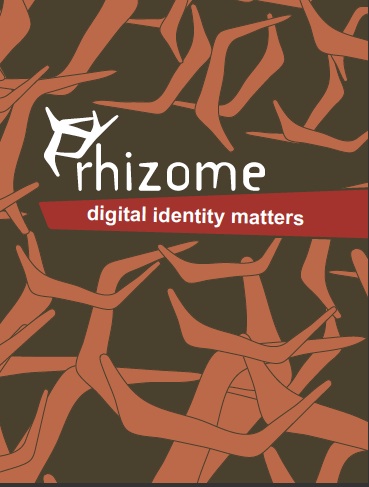
Over the last two years I have been lucky to work on a project called Rhizome. Rhizome is a research and development project, funded by Eduserv, exploring the key social and technical elements that impact on the construction of online identities.

The Rhizome awareness report, published today and entitled ‘Digital Identity Matters’ highlights the issues we face when dealing with our online identities. It outlines the design pattern approach that has been used to help define a set of problems and their solutions that all relate to our understanding and use of a digital identity. The material is released as an open access resource and is aimed at contributing to a deeper understanding of digital identity and the impact it can have on the individual and those around them. It will be of relevance to anyone who uses the Internet to disclose personal information about themselves – be it purposefully through the use of social media tools or as a result of work-based professional activities. The report can be downloaded from the Rhizome project web site. The following text is an except from the introduction to the report.

“Our relationship with the Internet is changing. Mobile devices, wireless connectivity, and our increasing virtual presence across multiple social media services have all but collapsed the boundary between being online or offline. Together the virtual and the real form the seamless space in which many of us live out our daily lives. We fashion the self through social interaction, community and network affiliations, and here come to construct our identities as well as interpret the identity of others.
The ease with which individuals can now produce, reproduce and distribute digital content has powerfully shifted the ways in which we think about global connectedness, media access and distribution, social action and the production of knowledge.

Our ability to engage so readily with digital media and online networks is empowering but our resultant actions also make us vulnerable. We suffer the pressures of information overload, time management and, as we argue in this publication, the need to curate our increasingly visible digital lives. The Internet is not a set of static objects but a dynamic network of connected, interacting subjects.

How does our online visibility affect who we think we are and our ability to act with purpose and intent? How should we ethically respond to concerns about the impact of one person’s online behaviour upon the lives of others. These are two of the questions that are explored here.

We focus on a design pattern called ‘Putting Children First’ and two supporting case-stories that describe the dangers of using an online photo-sharing service. Together they illustrate the complexities of negotiating our responsibility to others when we are in the process of developing our own digital identities. This pattern offers a design solution for using social media in a thoughtful, literate and ethically responsible way.

One of the aims of this publication is to raise awareness and we hope you will distribute this material as widely as possible.”

It’s all in the connection!

March 16th, 2010 by Cristina Costa
This is what started to be a very short post where I aimed to share D’arcy’s really interesting video about ‘How do you connect to people online’?, which Irmeli Aro shared with me via FB.   But I ended up tying it with today’s session on social media to raise of researcher profile. How do you connect [...]
  • Search Pontydysgu.org

    News Bites

    From a Jisc press release:

    Over 14,000 items of archived TV footage from 17 European countries are now available via the EUscreen online portal for teaching, research and general interest.

    EUscreen – the result of a collaboration between 36 partners across Europe – provides a rich insight into Europe’s television heritage with content dating from the 1920s to the present day.

    The portal includes rare footage and commentary on key events in history, including a 1962 interview with Martin Luther King about racial discrimination in the US.

    John Ellis, Professor of Media Arts at Royal Holloway and principal investigator on the EUscreen project, said: “This is a valuable resource for anyone interested in social history or indeed TV history, as it brings together tens of thousands of clips from across Europe. The portal is available to anyone (not only academics) and it is very easy to get absorbed and spend hours browsing all of the footage.”

    The expansive footage has also proved popular as a learning aid for foreign language students, with clips available in 14 languages.

    By the end of September 2012, there will be around 30,000 items of digital content freely available on the portal as the European providers continue to add carefully selected material.

    Explore the EUscreen footage


    Open online seminar

    Jisc are hosting an open, online seminar on ‘Making Assessment Count (MAC)’ on Friday 3rd Feb – 1-2pm. The presenters are Professor Peter Chatterton (Daedalus e-World Ltd) and Professor Gunter Saunders (University of Westminster).

    The mailing for the seminar says” “The objective of Making Assessment Count is primarily to help students engage more closely with the assessment process, either at the stage where they are addressing an assignment or at the stage when they receive feedback on a completed assignment. In addition an underlying theme of MAC is to use technology to help connect student reflections on their assessment with their tutors. To facilitate the reflection aspect of MAC a web based tool called e-Reflect is often used. This tool enables the authoring of self-review questionnaires by tutors for students. On completion of an e-Reflect questionnaire a report is generated for the student containing responses that are linked to the options the student selected on the questionnaire.”

    You can find out more ans sign up for the seminar at  http://jiscmac.eventbrite.co.uk/


    EC-TEL 2012

    The EC-TEL 2012: Seventh European Conference on Technology Enhanced Learning 21st Century Learning for 21st Century Skills takes place on 18-21 September 2012 at Saarbrücken in Germany.

    The focus for the conference includes:

    - How can schools prepare young people for the technology-rich workplace of the future?
    - How can we use technology to promote informal and independent learning outside traditional educational settings?
    - How can we use next generation social and mobile technologies to promote informal and responsive learning?

    The deadline for proposals is April 2.


    Visitors and Residents

    David White (University of Oxford) and Dr. Lynn Silipigni Connaway (OCLC) have been attracting quite a stir with their JISC-funded work on Visitors and Residents: What Motivates Engagement with the Digital Information Environment?, being undertaken as part of the Developing Digital Literacies programme webinar series.

    Slides, audio and a recording of the Blackboard Collaborate session where they presented some of the findings of their work can be found at http://bit.ly/jiscdiglitvr.


    ECER 2010

    The keynotes, videos, radio shows and interviews from the ECER 2010 Conference in Helsinki:

    On the ECER 2010 website.

    Taccle handbook for teachers order form

    Here you find the Taccle handbook for teachers order form.

    Twitter

    Follow Graham Attwell on Twitter Follow Cristina Costa on Twitter Follow Dirk Stieglitz on Twitter

    Other Pontydysgu Spaces

    • Pontydysgu on the Web

      blip.tv
      Watch the Pontydysgu Videos
      pbwiki
      Our Wikispace for teaching and learning
      Sounds of the Bazaar Radio LIVE
      Join our Sounds of the Bazaar Facebook goup. Just click on the logo above.

      Our next programmes will be live from the German Moodlemoot in Emsden. Full details coming soon

  • Sounds of the Bazaar AudioBoo

  • Recent Posts

  • Archives

  • Meta

  • Upcoming Events

      There are no events.
  • Categories