Archive for the ‘podcasting’ Category

Sounds of the Bazaar Internet Radio Summer Tour

July 8th, 2011 by Graham Attwell

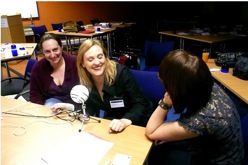
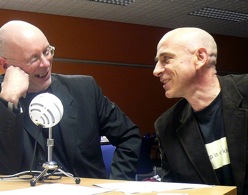
It is becoming a bit of a tradition that every summer the Sounds of the Bazaar Internet Radio show goes on tour. This year is no exception. And we have lined up a brilliant schedule over the next month including live coverage from conferences, workshops, summer schools and festivals spanning four countries.

To listen to any of the programmes just go to http://cp2.internet-radio.org.uk/start/ravenscroft/

You can listen direct from this web page or open the stream in the music player of your choice.

We kick off next week from the Personal Learning Environments Conference in Southampton, England (#PLE_SOU) with two lunch time shows. We wil be broadcasting live interveiws, vox pops and bringing you the best of the conference live from Southampton. The shows run from from 1330 – 1400 UK Summer Time (1430 – 1500 Central European Time) on Tuesday 12 and Wednesday 13 July.

On Friday 15 July, we have a special broadcast being produced as part of a workshop with Inspire! the Education Business Partnership for Hackney, the Yo youth agency and the University of East London and sponsored by the RadioActive and G8WAY projects. More on this soon but it promises to be great fun. The programme goes out from 1530 – 1600 UK Summer Time (1630 – 1700 Central European Summer Time).

The following week we will be broadcasting LIVE from the Gary Chapman International School on Digital Transformation in Porto, an event jointly organised between the University of Porto and the University of Texas.

The summer school themes are

  • Information access and open civic discourse
  • Digital tools for government transparency
  • Evolving Internet content regulation and the public’s right to information
  • Digital media and the democratic process
  • Factors influencing the growth of online civic engagement

Details of the radio show are still being finalised but we can promise you some surprise guests along with great interveiws and content for anyone intersted in digital media.

And the last stage of our summer tour takes us to SMIAF – the San Marino Arts Festival where we will be running workshops and broadcasting live from one of the city squares. If you are interested in getting involved here are more details:

Graham Attwell (UK) & Dirk Stieglitz (DE) di “Pontydysgu – Bridge to Learning” e della web radio: “Sounds of the Bazaar” condurranno il workshop in occasione dello SMIAF 2011.

Insieme a loro si capirà come costruire una web radio, come produrre il materiale per il broadcasting e tutto quello che serve per trasmettere.

Il workshop prevede due incontri:
Venerdì pomeriggio a partire dalle ore 15
Sabato mattina alle ore 10,30.

***Si richiede ai partecipanti un pc, mac, laptop…personale.
Lo SMIAF non fornisce computer ma solo la connessione WIFI, gentilmente concessa da PRIMA s.r.l.

Dopo il workshop..anche broadcasting in diretta:
Sabato 6 e domenica 7 agosto in occasione dello SMIAF si potrà dare vita alla prima SMIAF web radio e trasmettere in diretta da P.zza S.Agata durante il Festival.
I partecipanti al workshop e anche al festival sono liberi di trasmettere musica, interviste, e tutto quello che ritengono bello ed interessante per quei giorni.

Per iscrizioni al workshop, invia una email a: smiaf.giovanisaperi@gmail.​com

Don’t miss these shows – there will be lots of room for participation and we are looking forward to a great summer radio tour.

Radio days

March 9th, 2010 by Graham Attwell

Through the Mature project I have been invited to submit a proposal for a lecture or workshop for the JTEL Summer School to be held in Ohrid in June. The JTEL summer schools, the publicity claims, usually attract about 80 researchers, providing an exciting forum for cross-disciplinary dialogue, fostering new research collaborations and partnerships, and an opportunity for the next generation of TEL researchers to gain insight from leading experts in the field.

The summer school is being organised by the Stellar network and proposals were asked to explain how they contribute to the network’s three Grand Challenges:

  • Connecting learners
  • Orchestrating learning
  • Contextualising learning environments

So here’s my proposal. I enjoyed writing it and if anyone else is interested in us running such a workshop juts get in touch.

Short description

The workshop will focus on the use of internet radio in education.

1) An exploration of the use of media (and particularly internet radio and television) for learning and shared knowledge developmentThis will include looking at issues such as:

a) The appropriation of media

b) The change from passive media to interactive Web 2.0 supported media and the changing distinctions between broadcaster/program planner and listener/consumer.

c) How media such as radio can support the development of online communities

d) The use of media to bridge contexts and provide spaces for exploration and shared meaning making.

2) A practical hands on session on how to plan develop and broadcast live internet media. This will include storyboarding, interviewing, finding Creative Commons licensed music, making jingles, mixing and post processing, directing and producing and using the technology for live broadcasts.

3) The third session is planned to take place in a lunchtime or evening session. This will be a live 45 minute to one hour broadcast “Sounds of the Bazaar – Live from Ohrid”. It is hoped to involve all summer school participants in the broadcast. The broadcast will be publicised in advance through iTunes, Facebook, Twitter and other social software platforms. It is also intended to use the boradcast to link to other researchers in TEL from around the world not able to be at the summer school. The programme will be recorded and made available through the Summer School web site, the Mature project web site, the Pontydysgu web site and through iTunes.

Contribution to the Grand Challenges agenda

The workshop is primarily designed to contribute to the Grand Challenge of Contextualising virtual learning environments and instrumentalising learning contexts.

Live internet radio provides both a shared context and space for learning, with universal reach outside of institutional or national boundaries, whilst at the same time allowing individual to collectively contribute to the development of shared artefacts, which in themselves can become part of the repertoire of a community of practice. Radio also offers a means of actively engaging learners in a community and through appropriation of what was a push (or broadcast) media, through merging with Web 2.0 tools and standards allows community participation and self expression.

Nauka “na wynos”

February 3rd, 2010 by Ilona Buchem

Nareszcie mam chwilę na mój pierwszy … ojej, jak to sie nazywa po polsku … aha, znalazłam, wpis na blogu! Eureka! Ja się przez tego bloga nauczę przynajmniej nowej wersji polskiego – polskiego 2.0 ;-)  Bardzo Was z góry przepraszam, za moje ewentalne potyczki językowe, ale mieszkam poza Polską od jakiś 10 lat i od tego czasu trochę się w języku zmieniło…

No, ale to inny temat.

Dzisiaj chcę się z Wami podzielić moimi spostrzeżeniami na temat nowych możliwości, jakie daje prowadzenie “na żywo” lub udostępnianie wcześniej zarejestrowanych wykładów przez Internet.

Coraz więcej uniwersytetów, uczelni i innych placówek oświatowych udostępnia swoje wykłady w Internecie, przełamując w ten sposób m.in. bariery czasowe i przestrzenne. Każdy może w najbardziej dla siebie dogodnym miejscu i czasie obejrzeć wykład na interesujący go temat. Do tego wielokrotnie i we własnym tempie. Profesorowie, których znamy tylko z imienia na okładce książki, stają się przez to dla nas żywi, prawie “namacalni”. Możemy lepiej poznać tok ich myśli i sposób argumentowania.  Taki cyfrowy wyklad można obejrzeć lub posłuchać sobie na komputerze/laptopie, na iPodzie, mp-trójce albo na innym przenośnym urządzeniu.

Ja na przykład, chętnie słucham nagrań Prof. Gabi Reinmann na iPodzie, kiedy jadę kolejką do pracy. A że mieszkam w Berlinie, jest to dla mnie sposób na konstruktywne spędzanie 100 minut (sic!), które codziennie poświecam na dojazdy …

Znane uniwersystety, jak Yale, MIT, Harvard, Stanford, Berkeley, Princeton, oferują takie, bardzo często darmowe, wykłady “na wynos” nie tylko swoim studentom, ale tez i szerokiej publiczności.

Niedawno w Washington Post Bill Gates stwierdził, że takie portale jak Academic Earth zrewolucjonizują edukację. Academic Earth, Lecture2Go lub Learners TV oferują dostęp do wielu wykładów, prezentacji i kursów, umożliwiając nie tylko personalizację nauki, ale też interaktywność i komunikację z innymi osobami o podobnych zainteresowaniach. Na Academic Earth można na przykład dodać nagranie do listy ulubionych lubi polecić ulubiony wykład innym. Na kanale YouTube uniwersytetach Berkeley czy Stanford można oceniać, komentować i dodawać wykłady do własnych “Playlists”, czyli organizować np. na podstawie tematu, profesora lub uczelni. Takie indywidualne organizowanie materiałow edukacyjnych pozwala nam na przejęcie większej odpowiedzialności za własna naukę.

Także Apple ma swój kanał edukacyjny, ktróry daje dosęp do nagrań audio. Ponownie innowacyjne uniwersystety Stanford i Berkeley zapewnią dostęp do wielu cyfrowych nagrań audio na iTunes Store. Są tam zarówno strony publiczne, które obejmują wolnodostępne kursy i wykłady oraz strony dostępne tylko dla uczelnianej społeczności.

Ale podczas gdy kilka znanych uczelni udostęnia darmowe wykłady, wciaz istnieje bariera kosztów i bariera kompetencji związana z dostępem i rozpowszechnianiem takich materiałów na wielu innych  uniwersystetach. Wiekszość uczelni działa nadal w tradycyjny sposób, pomimo że istnieją już rozwiązania techniczne i dobre przykłady, na których można się wzorować. Jest też problem wyposażenia placówek oświatowych, np. nie wszystkie biblioteki posiadaja komputery z dostepem do Internetu.

Myślę, że w wielu przypadkach przydatna jest taktyka małych kroków. Jeśli znajdzie się ktoś, kto zainspiruje, sporóbuje, zaeksperymentuje, to są szanse, że ta iskierka rozpali ogień.

Jakie są Wasze doświadczenia z nauką “na wynos”? Z jakich kanałów korzystacie? Może są u Was na uczelni pierwsze próby z wykładami online? Bardzo jestem ciekawa. Piszcie!

Adding internet radio to the mix

July 30th, 2009 by Graham Attwell

The Jisc SSBR Institutional Innovation project conference on Institutional Impact, held last month, featured a series of accompanying internet radio broadcasts produced by Dirk Stieglitz and myself.  The radio was also streamed into the Elluminate platform and into the Second Life social event in the evening. The keynote presentation by John Cook was broadcast live,  ande radio programmes featured music, interviews and phone in sessions with guests.

Following the event I was asked to produce a short piece for the Jisc SSBR Create project newsletter, which is sent to all the programme projects. I hammered something short and sweet into an email and forgot about it. Anyway a week or two later, Goerge Roberts got back to me asking for “something a little more reflective and analytical about the intention, effect and outcome of the radio, not just what happened.”

That I have done and emailed off to George and to Emma Anderson who edits the newsletter. But I thought the ‘reflection’ might be of interest to a wider audience. So here you go….

“The radio show was seen as an experiment and had a number of objectives. One aim was to experiment with mixing different media in an online conference. Different media provide different affordances, and a mix of media can provide a richer online learning environment. However, anecdotal evidence would suggest that participants can be confused by multiple platforms especially when each requires a separate login. The radio programme was streamed through Elluminate allowing easy access, despite offering lower quality than the online internet stream. Although other conferences and events – notably those organised by Webheads – have used internet radio as part of the ‘mix’, as far as we are aware this was the first time internet radio had been streamed through an online platform in this way.

A second issue with online conferences is continuity. Experience of previous events suggests that the concentration involved in participating in such events is tiring and that frequent breaks are desirable between sessions. However, with the lack of proximately of co-participants in a shared physical environment, the continuity of the event is lost. The radio programme provided continuity by ensuring there was always something happening, whilst at the same time allowing for less intensive concentration and participation than the regular conference sessions. At the same time the radio was able to offer both a continuity link in terms of the themes of the conference and an opportunity to extend, explore and reflect on those themes through pre-recorded and live interviews with those involved in similar or related projects and initiatives.

Whilst parts of the radio broadcasts were streamed into the Elluminate portal, the broadcast also allowed those not registered for the conference (for which registration was limited to Jisc programme participants) to listen to the keynote presentation by John Cook. Although the radio was announced in advance, we suspect that most listeners learnt about the broadcast from Twitter.

Although our statistics are limited, it is interesting to note that a considerable number of listeners appear to be from outside the UK and particularly from continental Europe. This could be of potential importance in dissemination or ‘benefits realisation’ for Jisc projects.

All the radio broadcasts have been made available after the conference as MP3 podcasts. The podcasts of previous live radio programmes have been relatively popular, usually attracting at least 500 downloads over a six month period. The podcast of last year’s Jisc emerge project live broadcast form Alt C in Leeds has had over 2500 downloads!

Getting the feel and atmosphere right for the broadcasts is an ongoing issue. We had a slightly different approach to the different programmes broadcast through the day. The morning programme, prior to the conference was mainly music, with some preview of the days activities. The morning and afternoon coffee break programmes featured Jisc projects and initiatives, whilst the lunch time programme featured interviews with Jisc programme managers. Finally the evening programme was seen as a magazine style ‘wrap-up’ to the day, featuring live interviews with organisers of other UK and European projects as well as providing an opportunity for reflection by the conference organisers. Our broadcasting of music in the radio programmes has proved highly popular, However, it is difficult to choose a mix of music which suits everyone’s tastes. All the music is from the Creative Commons Jamendo web site, meaning that we remain legal whilst at the same time promoting open content. However, this does mean we are unable to play music which is familiar to people and this may be challenging, especially early in the morning! Next time we will try to provide a wider mix of music.

In conclusion, we feel the radio was successful, enhancing the conference, providing a showcase for multi channel and multi platform connections and allowing for reflection and continuity in the overall event.

The shows were presented by Graham Attwell and Dirk Stieglitz selected the music, produced the programme and undertook the post processing.”

A day of internet radio goodness

July 7th, 2009 by Graham Attwell

This Thursday features a day of LIVE internet radio to support the Jisc Institutional Innovation programme online conference on Institutional Impact.

We will be broadcasting four programmes during the day.

The Morning Programme

The morning programme starts at 10.00 CET (9.00 UK Summer Time) and will run until 1215 CET. The will feature music and chat. At around 11.00 CET we will brodacst Professor John Cook’s keynote speech on “Scaffolding the Mobile Wave”

  • How can learning activities that take place outside formal  institutions, on platform of the learners choice, be brought  into institutional learning? New digital media can be regarded as cultural resources that can  enable the bringing together of the informal learning contexts in  the world outside the institution with those processes and contexts  that are valued inside the intuitions. The big problem is that reports show that Social Software and Google  are not enabling the critical, creative and reflective learning that  we value in formal education.

The Lunch Time Show
The lunch time broadcast will be from 1400 – 1430 CET (1300 – 1330 UK Summer Time. The show will feature interviews with Ruth Drysdale from Jisc and David Morris plus more music.

The Afternoon Show
The mid afternoon show from 1600 – 1630 CET (1500 – 1530 UK Summer Time)  will feature guest slots from Howard Noble from the Low Carbon ICT project and from Luis Francisco Pedro form Portugal on introducing PLEs throughout the institution.

The Evening Show
The evening show kicks off at 1930 CET 18.30 UK summer Time. Besides providing a chance for quick reflections on the conference, it will also be featuring interviews with leading researchers and practitioners on institutional innovation from all over Europe (we have some great gusts lined up – I will try to provide you with a trailer for them tomorrow). From 2000 CET (1900 UK Summer Time) onwards it will also be streamed into Second Life for participants in the Institutional Innovation conference social event. The show ends at 2030 CET (19.30 UK Summer Time).

How to listen to the programme.

You can access the internet radio feed by going to http://radio.jiscemerge.org.uk:80/Emerge.m3u in your browser. This will open the stream in your MP3 programme of choice (e.g, iTunes).

Please feel free to just sit back and enjor the show. But if you would like to come on the show live to provide your reflections and ideas about the issues being discussed then please skype or email Graham Attwell – graham10 [at] mac [dot] com or GrahamAttwell on skype.

Sounds of the Bazaar LIVE from Loughborough – the podcast

March 14th, 2009 by Graham Attwell

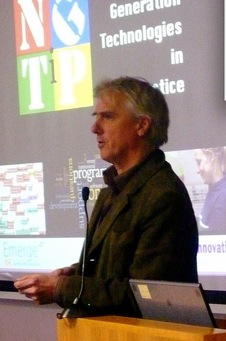
Another great edition of Emerging Sounds of the Bazaar LIVE from Loughborough. This show was broadcast from the Jisc Users and Innovations programme Next Generation Technologies in Practice Conference.

The show was presented by Graham Attwell and Josie Fraser.

It features George Roberts talking about the development of the JISC Emerge community, about building sustainable communities of practice in general and about Open Space technologies.

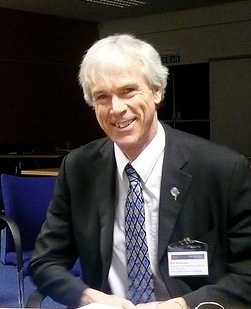
George is followed by Mark Van Harmelen talking with Graham Attwell about Personal Learning Environments. Mark reflects on the stage of development of PLEs and whether or not it is possible to prescribe the use of an institutional PLE. He goes on to describe the so called Manchester PLE that he is developing with support from the Users and Innovation programme.

Nicola Whitton and Rosie Jones talk to Josie Fraser about the potential of Augmented Reality Games for enhanced learning based on their work for Jisc on the Argosi project.

And Bob Rotherham from the Sounds Good project talks about the use of audio and MP3 recordings for giving feedback to students on their work.

Many thanks to everyone who helped out with the programme, including Steven Warburton who hosted the chatroom, Joe Roso who acted as producer and Dirk Stieglitz for sorting out the technical set up.

Music is by the Drunk Souls from the On Verra Plus Tard album from the Craetive Commons supported Jamendo web site.

Web2Rights – the podcast

January 15th, 2009 by Graham Attwell

Whilst we were at Online Educa Berlin, we undertook a series of interviews and audio and video recordings. These are slowly trickling out of the post production department!

The first out is recording of a presentation by Derek Stephens and Neil Witt from the Jisc Users and innovation programme Web2Rights project.

Web2Rights is a JISC funded project, whose purpose is to develop a practical, pragmatic and relevant toolkits to support the projects funded within the JISC Users and Innovation Programme in their engagement with next generation and Web2.0 technologies and emerging legal issues, such as IP, libel and accessibility.

There are a number of ways in which these projects will engage with Web2.0 and the resources created here will be relevant for projects which are:

  • Adapting and deployment of pre-existing tools, technologies and software
  • Developing new tools, technologies and software
  • Adapting and using own content
  • Use of third party created content

However the outputs of the project will be relevant for many projects. the issues the Web2Rights project is looking at the challenges of Web 2.0 technologies, present for Intellectual Property (IP) Rights and other legal issues. These issues include:

  • Do IP rights exist in a virtual world and, if so, who owns them?
  • Who owns the rights in works that are a result of collective collaboration?
  • What happens if you can’t find the rights holders?
  • What are the legal risks associated with Web 2.0 engagement?
  • How can risks associated with content reuse be sensibly managed?

We have posted two versions of the presentation. The first is an MP3 audio recording and the second an M4a Enhanced version (this includes slides and can be viewed on iTunes or an iPod).

Dragons Den – the podcast

November 25th, 2008 by Graham Attwell

Here it is – the podcast of the live radio show.

On Monday we broke new ground with our Sounds of the Bazaar radio show. We produced a special issue of Emerging Sound of the Bazaar entitled ‘Into the Dragons Den’.  The programme was a fly on the wall special following the progress of a Dragons Den session organised by the Jisc Emerge project. What’s it all about? Emerge supports a range of projects funded by the Jisc Users and Innovation programme. The projects are mainly focused on developing social software for use in education. Part of the support process has been through a four stage development model. As part of that model, at different times during the project development, project developers get invited to a session where they are quizzed by ‘Dragons’ on the progress of their project.

The Dragons Den session featured on Sounds of the Bazaar podcast is the Preview project which is developing and piloting models for Problem Based Learning in Second Life. Maggie Savin-Baden represented the project. Paul Bailey and Chris Fowler were the dragons.

I’m not sure the Dragons roared. In fact, I think Maggie slayed the Dragons. But judge for yourself.

As always many thanks to all those who took part in the programme including our phone in guests. Production and music by Dirk Stieglitz. (NB – don’t be offput by the volume on the first minute – I got overexcited).

Your chance to participate in tonight’s radio show

November 24th, 2008 by Graham Attwell

Tonight we broadcast a Sounds of the Bazaar Soecial radio show ‘Into the Dragons Den’.  The programme is a fly on the wall special following the progress of a Dragons Den session organised by Emerge. The show goes out at 19.00 UK time, 20.00 Central European Time as the kick off for the Emerge online conference on Altered States: practitioners, innovation and institutions. Read on for details of how to listen to the show.

The Dragons Den session featured on Sounds of the Bazaar is the Preview project which is developing and piloting models for Problem Based Learning in Second Life. Maggie Savin-Baden will represent the project. Paul Bailey and Chris Fowler wil be the dragons. It is going to be great fun.

This programme will be a little different in format to previous Sounds of the Bazaar broadcasts. It is a documentary. And we want you to skype us with your reactions to the programme. Our skype line – just search for GrahamAttwell in skype – wil open at the start of the programme and will remain open until half an hour after the programme. It will also be open from 10.00 – 1300 UK time, 9.00 – 12.00 tomorrow, Tuesday, 25 November. We will record all your reactions and broadcast these as a follow up podcast. Please participate – it is a new experiment for us in broadcasting your views.

The programme will last about 45 minutes. To listen to the programme just go to http://radio.jiscemerge.org.uk/Emerge.m3u in your browser. The stream should open in your MP3 player of choice. And if you’d like to chat during the programme Cristina Costa will be in the chat room at http://tinyurl.com/soundschat. Just add your name in the text field (leaving the password field blank) and chat away.

Blogging and Podcasting for Self Directed Learning

September 4th, 2008 by Graham Attwell

This was recorded live at the EduMedia conference in Salzburg. Many thanks to Andreas Auwarter who recorded the audio and did the post processing.

  • Search Pontydysgu.org

    News Bites

    From a Jisc press release:

    Over 14,000 items of archived TV footage from 17 European countries are now available via the EUscreen online portal for teaching, research and general interest.

    EUscreen – the result of a collaboration between 36 partners across Europe – provides a rich insight into Europe’s television heritage with content dating from the 1920s to the present day.

    The portal includes rare footage and commentary on key events in history, including a 1962 interview with Martin Luther King about racial discrimination in the US.

    John Ellis, Professor of Media Arts at Royal Holloway and principal investigator on the EUscreen project, said: “This is a valuable resource for anyone interested in social history or indeed TV history, as it brings together tens of thousands of clips from across Europe. The portal is available to anyone (not only academics) and it is very easy to get absorbed and spend hours browsing all of the footage.”

    The expansive footage has also proved popular as a learning aid for foreign language students, with clips available in 14 languages.

    By the end of September 2012, there will be around 30,000 items of digital content freely available on the portal as the European providers continue to add carefully selected material.

    Explore the EUscreen footage


    Open online seminar

    Jisc are hosting an open, online seminar on ‘Making Assessment Count (MAC)’ on Friday 3rd Feb – 1-2pm. The presenters are Professor Peter Chatterton (Daedalus e-World Ltd) and Professor Gunter Saunders (University of Westminster).

    The mailing for the seminar says” “The objective of Making Assessment Count is primarily to help students engage more closely with the assessment process, either at the stage where they are addressing an assignment or at the stage when they receive feedback on a completed assignment. In addition an underlying theme of MAC is to use technology to help connect student reflections on their assessment with their tutors. To facilitate the reflection aspect of MAC a web based tool called e-Reflect is often used. This tool enables the authoring of self-review questionnaires by tutors for students. On completion of an e-Reflect questionnaire a report is generated for the student containing responses that are linked to the options the student selected on the questionnaire.”

    You can find out more ans sign up for the seminar at  http://jiscmac.eventbrite.co.uk/


    EC-TEL 2012

    The EC-TEL 2012: Seventh European Conference on Technology Enhanced Learning 21st Century Learning for 21st Century Skills takes place on 18-21 September 2012 at Saarbrücken in Germany.

    The focus for the conference includes:

    - How can schools prepare young people for the technology-rich workplace of the future?
    - How can we use technology to promote informal and independent learning outside traditional educational settings?
    - How can we use next generation social and mobile technologies to promote informal and responsive learning?

    The deadline for proposals is April 2.


    Visitors and Residents

    David White (University of Oxford) and Dr. Lynn Silipigni Connaway (OCLC) have been attracting quite a stir with their JISC-funded work on Visitors and Residents: What Motivates Engagement with the Digital Information Environment?, being undertaken as part of the Developing Digital Literacies programme webinar series.

    Slides, audio and a recording of the Blackboard Collaborate session where they presented some of the findings of their work can be found at http://bit.ly/jiscdiglitvr.


    ECER 2010

    The keynotes, videos, radio shows and interviews from the ECER 2010 Conference in Helsinki:

    On the ECER 2010 website.

    Taccle handbook for teachers order form

    Here you find the Taccle handbook for teachers order form.

    Twitter

    Follow Graham Attwell on Twitter Follow Cristina Costa on Twitter Follow Dirk Stieglitz on Twitter

    Other Pontydysgu Spaces

    • Pontydysgu on the Web

      blip.tv
      Watch the Pontydysgu Videos
      pbwiki
      Our Wikispace for teaching and learning
      Sounds of the Bazaar Radio LIVE
      Join our Sounds of the Bazaar Facebook goup. Just click on the logo above.

      Our next programmes will be live from the German Moodlemoot in Emsden. Full details coming soon

  • Sounds of the Bazaar AudioBoo

  • Recent Posts

  • Archives

  • Meta

  • Upcoming Events

      There are no events.
  • Categories