Archive for the ‘games’ Category

Horizon Report – 2013

February 4th, 2013 by Graham Attwell

The New Media Consortium (NMC) and EDUCAUSE Learning Initiative (ELI) have released the NMC Horizon Report0> 2013 Higher Education Edition. This tenth edition describes annual findings from the NMC Horizon Project, a decade-long research project designed to identify and describe emerging technologies likely to have an impact on learning, teaching, and creative inquiry in education. Six emerging technologies are identified across three adoption horizons over the next one to five years, as well as key trends and challenges expected to continue over the same period, giving campus leaders and practitioners a valuable guide for strategic technology planning.

This year’s NMC Horizon Report identifies massively open online courses (MOOCs) and tablet computing as technologies expected to enter mainstream use in the first horizon of one year or less. Games and gamification and learning analytics are seen in the second horizon of two to three years; 3D printing and wearable technology are seen emerging in the third horizon of four to five years.

Download the report at go.nmc.org/2013-hied.

The future of digital games and learning

October 19th, 2012 by Graham Attwell

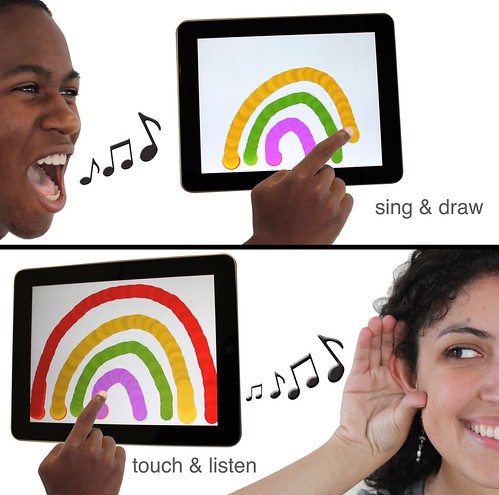
I like this video of a presentation by Nic Whitton on “What is the Future of Digital Games and Learning?”. Instead of showing her slides or a video of her presentation, the video gives the perspective of the participants on what she is saying. OK – it is a little whimsical. But it opens up all kinds of possibilities on how we might present multiple perspectives on a subject. I wonder if the points that were twittered are the same points she felt most important about her ideas?

Tweet archive from @mhawksey: http://bit.ly/Rq4iuE. Audio: ‘Kaleidoscope’ from Andries available on http://www.dance-industries.com/Andreis/

The Pedagogy of Deception

July 10th, 2012 by Graham Attwell


Great talk by Helen Keegan about curiosity and the pedagogy of deception (AKA lying). Don’t miss it. Helen is one of the best people I know for talking to in the pub but, if you want the official stuff, the blurb says:”her research focuses on digital culture, digital identity and literacy, and the interplay between formal and informal learning.”

Interested in games?

November 14th, 2011 by Graham Attwell

From Futurelab:

Aimed at teachers and those interested in using games with an educational intent, this handbook aims to provide some useful anchoring points for educators to make sense of the area and to develop practical approaches for the use of computer games as a medium for learning.

It is assumed by some that the models games employ lead to learning, as young people effectively learn how to play without necessarily being explicitly taught, doing vast amounts of reading or interacting with others; while others see games as boring, tedious, time-consuming, and repetitive.

Both of these viewpoints can be true: as stated the impact of a game is dependent on the game itself, but also the player, circumstance of use, mediation of the teacher and other players. In fact, many academic researchers of young people’s uses of digital media argue, counter to the hype, that computer games have been insufficiently well researched as a medium for learning.

In this handbook we aim to summarise not only the key theories around why they are considered to have potential, but how they have been used in the past, how they are used for learning in a family context, which attributes lead to learning, and considerations for using them with young people.

Download the book

Gry społecznościowe – nowy paradygmat?

January 22nd, 2011 by Ilona Buchem

Ostanio dużo uwagi z perspektywy pedagogiczno-technologicznej poświęcałam tak zwanym grom poważnym (ang. Serious Games). Szczególnie zainteresowały mnie nowsze formy gier poważnych, tzw. gry społecznościowym (ang. Social Games), takie jak CityVille, FarmVille czy FrontierVille firmy Zynga.

W związku z tym, że to mój pierwszy wpis na Paradygmacie 2.0 w nowym roku, pokuszę się o małą prognozę na rok 2011. Zacznę od gier społecznościowych produkowanych przez Zynga, jako dobry przykład na to, jak można wciągnąć  do zabawy miliony ludzi.  Zynga to firma, która stała się popularna przede wszystkim przez gry na Facebooka. Hitem stały się jej gry FarmVille, potem CityVille i FrontierVille. Gra FarmVille Druga polega na prowadzeniu gospodarstwa rolnego wraz z innymi graczami. Aby uzyskać dochody gracze wspólnie uprawiają pola, hodują zwierząta i zbierają plony. CityVille polega na planistycznym i biznesowym budowaniu miasta. Najważniejszym “surowcem” jakiego potrzebują gracze są znajomi – im więcej współgraczy, tym szybciej można rozwinąć miasto. W styczniu 2011 w grze CityVille bierze udział ponad 100 milionów graczy z całgo Świata! Czym tłumaczy się tak wielki sukces tych gier? Chociaż gry takie jak CityVille czy FarmVille przypominają m.in. Sim City, są one o wiele łatwiejsze i nastawione przede wszystkim na społeczność. Gry te nie polegają na interakcji człowiek-komputer, ale na interakcji człowiek-grupa przy pomocy techniki. To znacząca zmiana w dziedzinie gier poważnych.

Innym typem gier społecznościowych to gry z celem edukacyjnym, Gry te nie są ukierunkowane na rozrywkę, co nie oznacza, że nauka nie może być przyjemnością. Wręcz przeciwnie, gry społecznościowe z celem edukacyjnym wykorzystują aspekt rozrywki to przekazywania specyficznych treści, stymulowania podejmowania wyborów i decyzji, rozwiązywanie problemów, zmiany perspektyw lub nastawień.  Do takich gier należą gry ukierunkowane na ważne problemy społeczne takie jak m.in. prawa człowieka, zmiany środowiska, polityka, globalne konflikty czy zdrowie publiczne. Dobrym przykładem producentów takich gier jest organizacja non-profit “Games for Change” . Fundacja ta zaprojektowała nie tylko serię gier (np. 3rd World Farmer, At-Risk czy The Cost of Life, ale też i publiczny zestaw narzędzi (toolkit) do wspierania tworzenia własnych gier.  Również te gry grane są w grupie. O „Games for Change“ pisano ostatnio w Mashable.

Innym ciekawym przykładem jest gra EVOKE, wystartowana przez organizację World Bank, której celem jest walka z biedą, szczególnie w krajach rozwijających się. Gra EVOKE została zaprojektowana z myślą o tym, aby zachęcić młodych ludzi, szczególnie w Afryce, do wspólnego rozwiązywania kluczowych problemów, takich jak głód, bieda, choroby, konflikty, opieka medyczna, szkolnictwo i prawa człowieka. W grze wzięło udział około 20 tysięcy osób z około 150 krajów. Gracze stworzyli  ponad 23 tysiące wpisów na blogi, około 5 tys. zdjęć i ponad 1,500 filmów video.

Te fenomenalne wyniki skłaniają mnie do prognozy na 2011: W grach społecznościowych tkwi potencjał edukacyjny. Gry społecznościowe mogą stać się jednym z najciekawszych trendów w tym roku.

Co o tym sądzicie?

Young peoples’ use of computers

January 19th, 2009 by Graham Attwell

There is an interesting report today in the Guardian newspaper on the results of an annual survey, undertaken by the UK based ChildWise charity. The finding include:

Some 30% of the 1800 young people questioned say they have a blog and 62% have a profile on a social networking site. Accrording to the report children and young teens are more likely to socialise than do homework online.

Screen time has become so pervasive in the daily lives of five- to 16-year-olds that they are now skilled managers of their free time, juggling technology to fit in on average six hours of TV, playing games and surfing the net, it suggests.

But reading books is falling out of favour – 84% said they read for pleasure in 2006, 80% in 2007 and 74% this year.

Children who use the internet spend on average 1.7 hours a day online, but one in six spent more than three hours a day online on top of the 1.5 hours they spent on their games consoles. They still have time for 2.7 hours of television – though the report says they tend to multitask, doing these activities simultaneously.

One in three said the computer is the single thing they couldn’t live without, compared with a declining number – one in five – who name television.

Pupils are using the internet less while at school, frustrated by the low-tech access and the restrictions put in place to stop them from accessing inappropriate material.

Younger girls are now catching up with boys in the use of games consoles.

More on hairdressing and serious games

November 8th, 2008 by Graham Attwell

Some time ago I wrote a post entitled ‘Hairdressing, Serious Games and Learning‘. It was not because I knew anything about it but because I was live blogging a conference presentation. Frederic Aunis who works for L’Oriel presented a game they had developed for teaching business skills to hairdressers. t was a good presnentation and a good game. The problem is that he game is owned by L’Oriel and access is retsricted to those with a  contract to the company.

The post is – somehwat embrarrsingly, one of the most popular I have ever written. Yet, I am afraid, it gives no help to those who are hitting it – presumably becauase they are searching for games to help them in teaching hairdressers.

I don’t know a lot about hairdressing but I have gleamed a little from research colleagues at the University of Warwick. Hairdressng is a very polular vocational training course. In part it is a course chosen by those who do not know what to do. But in part it is because people envisage owning and running their own business. The sad factor is most do not make it and whilst hairdressing businesses can be very profitable the reality fo rmany emloyees is lng hours and low pay (OK – if you don’t agree please feel free ot comment!). And whilst most trainees take well to the practical elements of the course, they struggle more with the theort – especially science – and have little interest in learninga bout how to run a business.

Hence the idea of a game. And according to Frederic it works. But, back to the problem. We need open source games which can be used by all. I am not a hairdresser or a games designer. But I know a little about both. The European Lifelng Learning programme is now on call. Is there anyone interested in a project to design an open souce game for teaching hairdrssers about running a business. I am looking for hairdressers, hairdressing teachers and trainers and educational games deisgners. Just leave a comment or email me if you would be interested in such a project.

Hairdressing, Serious Games and Learning

May 22nd, 2008 by Graham Attwell

At a session at the Scil conference on serious games. Hope it is not too serious.

First up is Frederic Aunis on hairdressing. He works for L’Oriel. Kids end up doing hairdressing because they do not know what else to do or have failed at school. Hairdressers, he says, all over the world learn by doing. they need techncial and artistic skills, life and communication skills and a business understanding. But in schools business skills are not taught. Managers train apprentices in technical skills but not business skills.

Frederick has been developing a business game. His organisation is developing programmes for 20 million students (seems unlikely?). The game is called Hair Be12. It is translated into 13 languages and implemented in 10 countries. Now we get a demo. Choose a character and customise it. Then twelve episodes to the game. The first is on customer relations. A series of multiple choice questions. Then according to answers skills levels indicator moves up and down and turnover for business changes. No correct answers in game says Frederick. It’s like in real life. No-one complains but your turnover is hit. And there are bonus games. design your salon etc. At end get classification on the web based game – compared to others.

interesting that it did not really work as an individual self-learning game but took off when it was used in groups – it created, he says, “a wow effect.” And it has gone on to be used for facilitating meetings and organisational development within hair salons.

The topics have been ‘flattened’ to ensure game is applicable in different cultures.

Hm – not bad – looks quite fun, teaches something hard to learn any other way. At least it feels like a game. Maybe a bit limited in scope though. Big plus – he says it was relatively cheap to develop. My rating – cool. And a great presentation.

Contact url seems to be www.hair-be12.com – definitely worth a look.

  • Search Pontydysgu.org

    News Bites

    MOOCs and beyond

    A special issue of the online journal eLearning Papers has been released entitled MOOCs and beyond. Editors Yishay Mor and Tapio Koshkinen say the issue brings together in-depth research and examples from the field to generate debate within this emerging research area.

    They continue: “Many of us seem to believe that MOOCs are finally delivering some of the technology-enabled change in education that we have been waiting nearly two decades for.

    This issue aims to shed light on the way MOOCs affect education institutions and learners. Which teaching and learning strategies can be used to improve the MOOC learning experience? How do MOOCs fit into today’s pedagogical landscape; and could they provide a viable model for developing countries?

    We must also look closely at their potential impact on education structures. With the expansion of xMOOC platforms connected to different university networks—like Coursera, Udacity, edX, or the newly launched European Futurelearn—a central question is: what is their role in the education system and especially in higher education?”


    The cost of austerity and privatisation

    There is growing concern over the consequences of the English (Scotland, Wales and Northern Ireland have different policies) government’s cutbacks and privatisation of  careers guidance for young people. The International Centre for Guidance Studies reports on a discussion paper called ‘Cost to the Economy of Government Policy on Career Guidance: A Business Case for Funding and Strengthening Career Guidance in Schools‘ from Lizzie Taylor who is an Careers England Affiliate Member. “The report claims that the economic consequence of current government policy on career education is an escalating annual cost to young people in reduced and lost earnings, reaching £676m p.a. in 2018 before dropping back slightly to £665 m p.a.2022. The total cost in reduced and lost earnings to young people in the period 2013 to 2022 is estimated as £3.2bn.”


    Open Education 2030

    The Institute for Prospective Technological Studies (IPTS) –part of the Joint Research Center of the European commission –  is calling upon experts and practitioners to come up with visionary papers and imaginative scenarios on how Open Education in 2030 in Europe might look with a major focus on Open Educational Resources and Practices, in different education sectors.

    The foresight scenarios submitted can be normative or descriptive, idealistic or provocative, critical or imaginary, reflective or polemic, imaginative or concrete, comprehensive or selective, general or specific. They should be both inspiring and scientifically sound.

    Submissions are free to choose any angle, subject, approach, but they say the future vision and/or scenario should address the key question of how Open Education in 2030 in Europe might look, and include the role of OER.

    More details from the EU Europa website.


    PLE Conference Update

    I wasn’t overoptimistic about the Personal Learning Environments Conference this year. Discussions about PLEs have been subsumed in the hype over MOOCs. And most conferences are struggling with the ongoing recession. But I am delighted that we have received 59 submissions including a number of great proposals for interactive workshops.

    The PLE Conference takes place on 10 and 12 July in Berlin.


    Twitter

    Follow Graham Attwell on Twitter Follow Cristina Costa on Twitter Follow Dirk Stieglitz on Twitter

    Other Pontydysgu Spaces

  • Sounds of the Bazaar AudioBoo

  • Recent Posts

  • Archives

  • Meta

  • Upcoming Events

      There are no events.
  • Categories